





When businesses advertise on Meta, one of the first creative decisions they face is whether to use video ads or static ads. Both formats can generate strong results, but the better option depends on your campaign objective, audience, offer, budget, and how effectively the creative communicates the message.
A well-made video can capture attention, demonstrate a product, and tell a story within seconds. A strong static ad, on the other hand, can communicate a clear offer almost instantly and may be faster and more cost-effective to produce.
So, video ads vs static ads—which performs better on Meta?
The answer is not as simple as choosing one format. Meta advertising performance depends on how well the creative matches the audience and campaign goal. In many cases, the smartest approach is to test both formats and let actual campaign data determine the winner.
This guide explains the differences between Meta video ads and static ads, their advantages and disadvantages, when to use each, and how businesses can build a more effective Meta Ads strategy.
What Are Meta Ads?
Meta ads are paid advertisements displayed across platforms and placements within the Meta ecosystem, including Facebook and Instagram.
Businesses can use Meta advertising to achieve objectives such as:
- Brand awareness
- Website traffic
- Lead generation
- Product sales
- App promotion
- Engagement
- Retargeting
- Customer acquisition
The creative format plays an important role in campaign performance. Two of the most commonly used formats are static image ads and video ads.
What Are Static Ads?
Static ads use a single image or graphic to communicate a marketing message.
A typical static Meta ad may include:
- Product photography
- A headline
- A short value proposition
- Branding
- A call-to-action
- Promotional information
For example, an online clothing store might create an image featuring a new collection with a message such as:
“New Season. New Style. Shop Now.”
The user can understand the basic message without watching anything.
Advantages of Static Ads
1. Quick to Understand
Static ads can communicate an offer within a second or two.
This is particularly useful when the message is simple and direct.
2. Easier to Produce
A high-quality image generally requires less production time than a professionally filmed video.
This makes static ads useful for businesses with limited creative resources.
3. Easy to Test
Businesses can quickly test variations in:
- Headlines
- Images
- Offers
- CTAs
- Layouts
- Product positioning
4. Excellent for Product-Focused Campaigns
A strong product image can work particularly well when customers already understand what they are looking for.
5. Useful for Retargeting
Static ads can deliver a direct reminder to people who previously visited a website, viewed a product, or interacted with a business.
What Are Video Ads?
Video ads use moving visuals, animation, voiceovers, music, demonstrations, or storytelling to communicate a marketing message.
Video advertisements can range from simple smartphone videos to professionally produced brand commercials.
Common examples include:
- Product demonstrations
- Customer testimonials
- Founder videos
- Tutorials
- Before-and-after videos
- UGC-style content
- Reels-style advertisements
- Animated videos
- Behind-the-scenes content
Video gives marketers more opportunities to communicate information than a single image.
Advantages of Video Ads
1. Strong Attention Potential
Movement can naturally attract attention while users scroll through Facebook and Instagram.
A strong opening—or hook—can encourage users to stop scrolling and watch.
For example:
“Still spending hours creating social media posts?”
This immediately creates curiosity for the right audience.
2. Better Storytelling
Video can combine:
- Visuals
- Voice
- Text
- Music
- Demonstration
- Emotion
This makes it useful for businesses selling products or services that require more explanation.
3. Product Demonstration
Some products are difficult to communicate through a single image.
A video can show:
- How a product works
- How it is used
- What it looks like in real life
- Its features
- Its benefits
4. Human Connection
Video allows businesses to show real people.
A founder explaining a product, a customer giving a testimonial, or an employee demonstrating a service can make a brand feel more relatable.
5. Multiple Creative Possibilities
One video can be adapted into different formats and variations for different placements and audiences.
Video Ads vs Static Ads: Key Differences
| Factor | Video Ads | Static Ads |
| Attention | Strong potential through movement | Depends heavily on visual |
| Production | Usually more time-consuming | Generally faster |
| Storytelling | Excellent | Limited |
| Product Demonstration | Excellent | Limited |
| Simple Offers | Effective | Often excellent |
| Testing Speed | Can take longer | Usually faster |
| Human Connection | Strong | Depends on imagery |
| Retargeting | Very useful | Very useful |
| Cost of Production | Can be higher | Usually lower |
| Information Density | High | Lower |
| Creative Flexibility | Very high | Moderate |
Neither format automatically wins in every situation.
Which Performs Better on Meta: Video or Static?
The honest answer is:
It depends.
Meta advertising does not have a universal rule saying video ads will always outperform static ads.
A poor video can perform worse than an excellent static image. Similarly, a generic static image may be outperformed by a compelling video with a strong hook.
Campaign performance can depend on:
- Audience
- Campaign objective
- Offer
- Industry
- Creative quality
- Ad placement
- Landing page
- Copy
- Budget
- Targeting
- Conversion tracking
- Stage of the customer journey
That is why creative testing is more reliable than assumptions.
When Should You Use Video Ads?
Video ads can be especially useful when your message needs explanation or demonstration.
Use Video Ads for Product Demonstrations
If people need to see how a product works, video is often a natural choice.
For example, a skincare company could demonstrate how to apply a product rather than simply displaying its packaging.
Use Video Ads for Testimonials
A real customer speaking about their experience can communicate trust and credibility in a way that static text may not.
Use Video Ads for Storytelling
If your brand has an interesting story, founder journey, transformation, or customer problem to communicate, video gives you more room to tell it.
Use Video Ads for Complex Services
Businesses offering services such as consulting, software, education, or professional solutions may benefit from explaining their value through short videos.
When Should You Use Static Ads?
Static ads can be extremely effective when the message is simple and visually strong.
Use Static Ads for Promotions
If you have a straightforward offer such as:
“Flat 30% Off — This Weekend Only”
a static ad can communicate the message immediately.
Use Static Ads for Product Collections
E-commerce brands can use attractive product photography to showcase collections, categories, or individual products.
Use Static Ads for Retargeting
A simple reminder can be enough to bring a potential customer back.
For example:
“Still thinking about it? Your cart is waiting.”
Use Static Ads When Testing Many Concepts
Static creatives are often quicker to create, making them useful when you want to test several different visual concepts rapidly.
The Importance of the First Few Seconds in Video Ads
One of the biggest mistakes businesses make is treating a video advertisement like a traditional commercial.
People scrolling through social media are not necessarily waiting to watch your advertisement.
Your video needs to earn attention.
The opening should quickly communicate why the viewer should continue watching.
Weak Opening:
“Welcome to our company. We have been providing quality solutions for over 15 years…”
Stronger Approach:
“Your ads are getting clicks—but why aren’t they generating customers?”
The second opening immediately presents a problem relevant to the target audience.
Strong video hooks can include:
- A question
- A surprising statement
- A problem
- A transformation
- A product demonstration
- A strong visual
- A customer result
What Makes a Static Meta Ad Effective?
A successful static ad does not need to contain lots of information.
In fact, too much text can make an advertisement difficult to understand.
Focus on:
One Main Message
Do not try to communicate five different benefits in one image.
Strong Visual Hierarchy
The viewer should immediately understand:
- What is being offered
- Why it matters
- What action to take
Relevant Imagery
Use visuals that reflect the actual product, service, customer, or problem.
Clear CTA
Examples include:
- Shop Now
- Learn More
- Get Started
- Book Now
- Contact Us
- Sign Up
Meta Video Ads: Common Creative Mistakes
Even video advertisements can underperform when the creative strategy is weak.
Long Introductions
Do not spend the opening seconds introducing your company before explaining why the viewer should care.
No Hook
If nothing interesting happens at the beginning, users may scroll away.
Too Much Information
Trying to explain everything in one video can make the message confusing.
Poor Mobile Formatting
Meta ads are heavily consumed on mobile devices, so videos should be designed with mobile viewing in mind.
No Captions
Some users may watch without sound. On-screen text or captions can help communicate the message.
Static Meta Ads: Common Creative Mistakes
Too Much Text
An advertisement should not look like a blog post.
Weak Visuals
Low-quality or generic images can make a brand look less professional.
No Clear Offer
The viewer should understand what you are asking them to consider.
Weak CTA
If the user does not know what to do next, even an attractive ad can lose potential conversions.
Inconsistent Branding
Fonts, logos, colors, and visual styles should feel consistent with the brand.
How to Compare Video Ads and Static Ads Properly
If you want to determine which format works better for your business, do not compare them based only on likes or views.
Instead, compare meaningful advertising metrics.
Important metrics include:
- Click-through rate (CTR)
- Cost per click (CPC)
- Conversion rate
- Cost per lead (CPL)
- Cost per acquisition (CPA)
- Return on ad spend (ROAS)
- Cost per qualified lead
- Revenue
- Profit
For example, suppose:
Video Ad
- CTR: 2.5%
- CPC: ₹12
- Conversion rate: 8%
- CPA: ₹150
Static Ad
- CTR: 1.8%
- CPC: ₹9
- Conversion rate: 12%
- CPA: ₹100
The video may generate more clicks, but the static ad may produce cheaper conversions.
In this case, saying “video performed better” simply because it had a higher CTR would be misleading.
Don’t Optimize for Clicks Alone
This is one of the most important lessons in Meta advertising.
A creative with a high CTR is not automatically a winning creative.
Imagine two advertisements:
Ad A: 5% CTR but very few purchases.
Ad B: 2.5% CTR but significantly more purchases.
If your goal is sales, Ad B may be the better advertisement.
Always connect creative performance to the actual campaign objective.
Testing Video Ads vs Static Ads
The best way to answer “Video ads vs static ads—which performs better?” is to test both.
Create a controlled creative test.
For example:
Test 1: Same Offer
Keep the offer the same.
Test 2: Similar Audience
Use comparable audience conditions.
Test 3: Different Format
Create one video and one static version.
Test 4: Track Business Outcomes
Compare:
- CTR
- CPC
- Conversion rate
- CPA
- CPL
- ROAS
- Revenue
This gives you a more reliable picture of creative performance.
Should You Use Both Video and Static Ads?
In many campaigns, yes.
Using both formats can give your Meta advertising strategy greater creative variety.
For example:
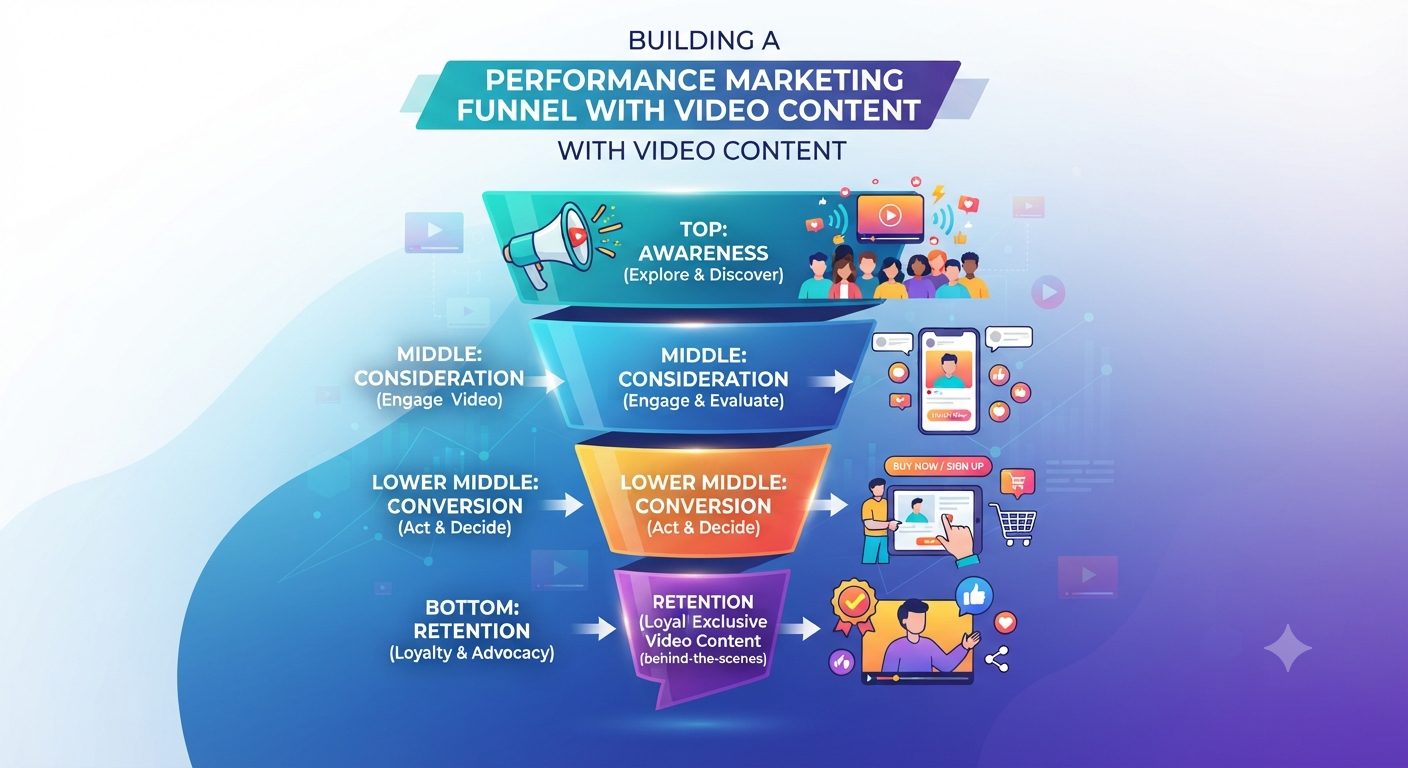
Top of Funnel
Use short videos, Reels, educational content, and engaging hooks to attract attention.
Middle of Funnel
Use product demonstrations, testimonials, comparison content, and educational creatives.
Bottom of Funnel
Use direct-response static ads, offers, testimonials, product reminders, and retargeting creatives.
This creates a more complete advertising funnel.
Video Ads vs Static Ads for Different Campaign Goals
| Campaign Goal | Often Useful Creative Formats |
| Brand Awareness | Video + Static |
| Product Demonstration | Video |
| E-commerce Promotion | Video + Static |
| Lead Generation | Video + Static |
| Retargeting | Static + Video |
| New Product Launch | Video + Static |
| Simple Discount | Static |
| Testimonials | Video |
| Complex Service | Video |
| Product Collection | Static |
These are starting points—not fixed rules. Actual campaign data should determine which creative performs best.
How a Digital Marketing Agency Can Help
Creating an advertisement is only one part of successful Meta advertising.
Businesses also need to consider:
- Audience research
- Campaign objectives
- Creative strategy
- Ad copy
- Landing pages
- Conversion tracking
- Budget allocation
- A/B testing
- Retargeting
- Performance analysis
A data-driven digital marketing agency can help businesses connect these elements rather than treating creative production and campaign management as separate activities.
At DigiPromoters, the focus is on measurable digital marketing and using campaign data to identify opportunities for improvement. Whether the goal is lead generation, e-commerce sales, or brand growth, the objective should be to understand which creative and strategy produce meaningful business outcomes.
Frequently Asked Questions
1. Are video ads better than static ads on Meta?
Not always. Video ads can be excellent for storytelling and demonstrations, while static ads can be highly effective for simple offers and direct messages. Performance depends on the campaign, audience, creative quality, and objective.
2. Do video ads get more engagement than static ads?
Video can generate strong engagement because movement and storytelling can capture attention. However, engagement alone does not determine whether an advertisement is successful. Conversions, CPA, revenue, and ROAS are often more important for performance campaigns.
3. Are static ads cheaper than video ads?
Static ads are generally faster and less expensive to produce, although production costs vary. A simple smartphone video may cost very little, while a professionally produced video can require significantly more resources.
4. Should small businesses use video ads on Meta?
Yes. Small businesses do not necessarily need expensive production. Simple product demonstrations, founder videos, customer testimonials, and UGC-style videos can be effective when the message and targeting are strong.
5. What metrics should I use to compare video and static ads?
Compare metrics that align with your objective, such as CTR, CPC, conversion rate, CPL, CPA, ROAS, revenue, and profit. For awareness campaigns, reach, impressions, video views, and engagement can also be useful.
6. Should I run video and static ads at the same time?
Testing both can be a good approach. Running different creative formats allows you to collect data and identify which format works better for your specific audience and offer.
7. How long should a Meta video ad be?
There is no single ideal length for every campaign. The video should be long enough to communicate the message but short enough to maintain attention. Strong hooks and clear messaging are generally more important than simply targeting a particular duration.
Conclusion: Test, Measure, and Let the Data Decide
So, video ads vs static ads—which performs better on Meta?
There is no universal winner.
Video ads can be powerful for storytelling, demonstrations, testimonials, and building a human connection. Static ads can be highly effective for clear offers, product showcases, retargeting, and rapid creative testing.
The best approach is not to choose a format based on assumptions. Test both and measure the outcomes that actually matter.
Look beyond likes, views, and impressions. Analyze CTR, CPC, conversion rate, CPL, CPA, ROAS, revenue, and profit based on your campaign objective.
A great creative is not simply the one that gets the most attention. It is the one that helps move the right audience toward the action that matters to your business.
Whether you are running your first Meta campaign or looking to improve an existing advertising strategy, combining strong creative with accurate conversion tracking, continuous testing, and data-driven optimization can make your advertising budget work harder.
The best Meta ad is not the one that looks better on paper—it is the one that delivers better results.