



Introduction
Search is changing.
For years, businesses focused on traditional search engine optimization (SEO) to help their websites appear in Google’s organic search results. The goal was straightforward: understand what people search for, create useful content, optimize web pages, earn authority, and improve rankings.
But users are increasingly asking questions directly to AI-powered search and answer engines.
Instead of searching for ten blue links and opening multiple websites, someone might ask an AI system:
“What are the best digital marketing agencies for a small business?”
The system may provide a summarized answer, compare several options, and sometimes mention specific businesses or sources.
This change has created a new area of digital marketing called Generative Engine Optimization (GEO).
GEO focuses on making a brand’s information easier for AI-powered search and generative systems to understand, trust, retrieve, and potentially cite or mention in their responses.
GEO does not mean that traditional SEO is dead. In fact, strong SEO fundamentals remain important. However, businesses now need to think beyond traditional rankings and consider how their content can become useful source material for AI-generated answers.
In this guide, we’ll explain what Generative Engine Optimization is, how GEO differs from SEO, why it matters for businesses, and how to prepare your website for AI search.
What Is Generative Engine Optimization (GEO)?
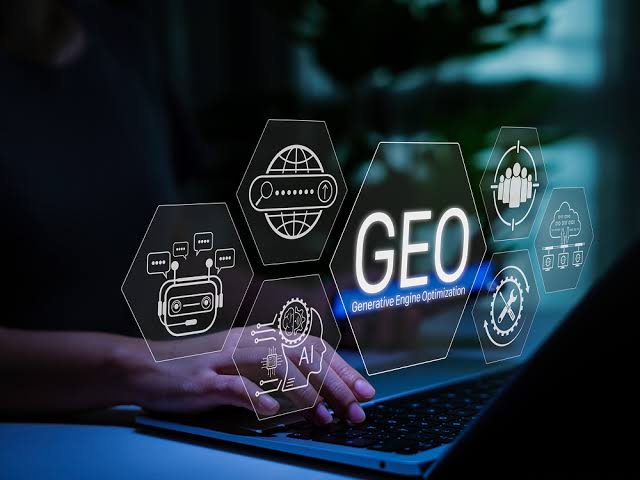
Generative Engine Optimization (GEO) is the practice of creating and structuring online information so that it is easier for generative AI and AI-powered search systems to understand, retrieve, summarize, and potentially reference.
Traditional SEO generally focuses on helping pages rank prominently in search engine results.
GEO focuses more broadly on how information is represented and surfaced within AI-generated answers.
For example, imagine a company provides digital marketing services.
With traditional SEO, it might optimize a page for:
“digital marketing agency in Noida”
With GEO in mind, the company may also create genuinely useful content answering questions such as:
- What does a digital marketing agency actually do?
- How much does digital marketing cost?
- Which marketing channels are useful for startups?
- What should a business consider before running Google Ads?
- How do SEO and paid advertising work together?
The goal is not to manipulate an AI system into mentioning a brand.
The goal is to create clear, authoritative, useful information that AI systems can understand and use when answering relevant questions.
Why Is GEO Becoming Important?
The way people discover information is becoming more conversational.
AI-powered search experiences can understand natural-language questions, combine information from multiple sources, and provide synthesized answers.
That creates a different discovery environment for businesses.
A customer might no longer search only:
“SEO agency near me”
They might ask:
“What should a local business look for when choosing an SEO agency?”
Or:
“Which digital marketing strategies work best for a startup with a limited budget?”
These questions create opportunities for businesses that publish detailed, trustworthy answers.
The important shift is from thinking only about keywords and rankings to thinking about questions, entities, context, credibility, and useful information.
GEO vs SEO: What’s the Difference?
SEO and GEO overlap, but their primary focus can differ.
| SEO | GEO |
| Focuses heavily on search engine visibility | Focuses on visibility within AI-generated answers and AI search experiences |
| Targets search queries and keywords | Targets questions, topics, entities, and conversational intent |
| Aims to improve organic rankings | Aims to make information useful and retrievable by AI systems |
| Uses technical SEO, content, links, and authority | Relies on clear content, structured information, authority, context, and strong sources |
| Often measures rankings, traffic, and conversions | Can also consider mentions, citations, visibility, and referral traffic from AI experiences |
| Primarily associated with traditional search engines | Primarily associated with generative and AI-powered search experiences |
However, these aren’t completely separate disciplines.
A technically poor website with unclear content is unlikely to perform well in either environment.
Strong SEO foundations can therefore support a broader GEO strategy.
How Does Generative Engine Optimization Work?
AI search systems don’t simply look for one exact keyword and return a matching page.
They can interpret the meaning and context behind a question.
For example, a user might ask:
“How can a small e-commerce business reduce its customer acquisition cost?”
A useful response could require information about:
- Paid advertising
- Conversion rates
- Landing pages
- Retargeting
- Customer lifetime value
- Email marketing
- Organic traffic
- Creative testing
A website that comprehensively explains these connected topics gives AI systems more useful information to work with.
This is why GEO involves creating content that is:
- Clear
- Specific
- Well-structured
- Factually accurate
- Contextually relevant
- Easy to understand
- Supported by credible information
- Consistent across the web
Key Elements of a GEO Strategy
1. Create Answer-Focused Content
AI search users often ask complete questions rather than entering short keyword phrases.
Instead of creating an article around only:
“Meta Ads”
build useful resources around questions such as:
- How do Meta Ads work?
- How much should a small business spend on Meta Ads?
- What makes a good Meta Ads campaign?
- Which Meta Ads metrics should businesses track?
- Why do Meta Ads generate clicks but no sales?
This creates content that directly addresses conversational search intent.
2. Build Topic Depth
Publishing dozens of unrelated articles isn’t necessarily the best approach.
A stronger strategy is to build depth around topics relevant to your business.
For example, a digital marketing agency could create a connected content ecosystem around performance marketing:
Performance Marketing
→ Performance Marketing Metrics
→ Conversion Funnels
→ Meta Ads
→ Google Ads
→ Retargeting
→ Video Advertising
→ Landing Page Optimization
→ Lead Generation
This gives search engines and AI systems more context about the site’s areas of expertise.
3. Demonstrate First-Hand Expertise
AI systems need reliable information.
Generic content that simply repeats commonly available information provides little differentiation.
Businesses can strengthen their content by including:
- Real examples
- Original analysis
- Practical recommendations
- Campaign lessons
- Case studies
- Expert explanations
- Original research
- Clear methodology
For example, instead of saying:
“A/B testing is important.”
Explain what should actually be tested, how to structure a test, what metric determines the winner, and what mistakes can make the test unreliable.
4. Make Information Easy to Extract
Clear structure helps both humans and machines understand content.
Use:
- Descriptive headings
- Short paragraphs
- Bullet points
- Tables
- Definitions
- Step-by-step explanations
- FAQ sections
- Clear answers to specific questions
For example:
What is a conversion funnel?
A conversion funnel is the series of steps a potential customer takes before completing a desired action, such as submitting a form or making a purchase.
A direct answer like this is easier to understand than burying the definition inside a long paragraph.
5. Strengthen Brand and Entity Understanding
Businesses should maintain consistent information about themselves across relevant online platforms.
Important information can include:
- Business name
- Services
- Industry
- Location
- Website
- Contact information
- Company descriptions
- Leadership information where appropriate
- Social profiles
- Relevant business listings
Consistency can help establish clearer context around the organization and what it does.
6. Use Structured Data Where Appropriate
Structured data helps search engines understand specific information on a webpage.
Depending on the content, websites may use relevant schema types for things such as:
- Organizations
- Articles
- Products
- Services
- Events
- FAQs where eligible and appropriate
Structured data isn’t a magic GEO switch, and adding schema does not guarantee AI visibility.
Its value is in helping machines interpret information more clearly when the markup accurately represents the visible content.
7. Keep Important Information Consistent
Imagine a company’s website says it provides five services while several other business profiles describe completely different services.
Inconsistent information can make the business harder to understand.
Businesses should regularly review important information across:
- Website pages
- Business profiles
- Social media
- Industry directories
- Author profiles
- Press coverage
The goal is to create a consistent digital presence.
What Types of Content Work Well for GEO?
There isn’t one guaranteed content format that will make a website appear in AI-generated answers.
However, useful content formats include:
Comprehensive Guides
Detailed guides can establish topical depth and answer multiple related questions.
Comparison Articles
Examples:
- SEO vs PPC
- Meta Ads vs Google Ads
- Agency vs freelancer
- Organic marketing vs paid advertising
Comparison content can be particularly useful for users making decisions.
Original Research
Original data, surveys, experiments, and analysis can give other websites something valuable to reference.
Case Studies
Case studies demonstrate how a business approached a real problem.
They can include:
- The original challenge
- Strategy
- Execution
- Results
- Lessons learned
Expert Q&A Content
Answering specific industry questions can help cover conversational search intent.
Definitions and Explainers
Clear explanations of industry terminology can make content useful to beginners and experienced readers alike.
How to Optimize Existing Content for AI Search
You don’t necessarily need to rewrite your entire website.
Start with your most important pages.
Step 1: Identify Your Core Topics
List the products, services, and subjects your business wants to be known for.
Step 2: Find Customer Questions
Look at:
- Search queries
- Sales questions
- Customer support conversations
- Reddit and community discussions
- Competitor content
- Frequently asked questions
Turn genuine customer questions into useful content opportunities.
Step 3: Improve Existing Articles
Look for pages that are:
- Too short
- Outdated
- Generic
- Difficult to navigate
- Missing important questions
- Lacking examples
Improve them with useful information rather than simply adding more words.
Step 4: Add Clear Answers
Where appropriate, answer important questions directly before expanding on the topic.
Step 5: Add Supporting Evidence
Use credible sources, original data, examples, and transparent explanations where relevant.
Step 6: Strengthen Internal Linking
Connect related pages so users and search systems can better understand the relationship between your topics.
Step 7: Update Regularly
Digital marketing, advertising platforms, technology, and AI search are changing quickly.
Review important content periodically and update outdated information.
How to Measure GEO Performance
GEO measurement is still evolving, and there is no single universal metric that completely captures visibility across every AI search system.
Businesses can monitor several signals.
AI Mentions
Check whether your brand appears when asking relevant questions in AI-powered search experiences.
Citations and References
Where the platform exposes sources, observe whether your website or content is being referenced.
AI Referral Traffic
Analytics tools may show traffic coming from certain AI-related referral sources.
Organic Search Performance
Traditional SEO metrics remain useful because search visibility and AI visibility can overlap.
Track:
- Organic clicks
- Impressions
- Rankings
- Organic conversions
- Branded searches
Leads and Revenue
Ultimately, visibility matters because it can contribute to business outcomes.
Monitor whether increased visibility leads to:
- Qualified enquiries
- Calls
- Form submissions
- Purchases
- Consultation bookings
- Revenue
Common GEO Mistakes to Avoid
Treating GEO as a Replacement for SEO
GEO should not be approached as “SEO is finished.”
Technical SEO, useful content, website quality, authority, and user experience still matter.
Creating Content Only for AI
Content should be written for people first.
If an article is difficult for humans to read, optimizing it for machines won’t solve the underlying problem.
Publishing Generic AI-Generated Articles
Simply producing large volumes of generic content isn’t a sustainable strategy.
Your content needs a reason to exist.
Add expertise, examples, original analysis, experience, and useful information.
Keyword Stuffing
AI search doesn’t mean businesses should fill pages with dozens of variations of the same phrase.
Natural language and topic relevance are more useful than repetitive wording.
Making Unsupported Claims
Avoid fake statistics, exaggerated results, and claims that cannot be verified.
Credibility matters.
Ignoring Brand Consistency
If your business information varies substantially across different platforms, review and standardize it.
Chasing Every AI Platform
You don’t need to create a separate strategy for every new AI tool.
Start with strong content, technical foundations, clear brand information, and genuine expertise.
Example: GEO Strategy for a Digital Marketing Agency
Imagine DigiPromoters wants to become more visible for questions related to digital marketing.
Instead of publishing only service pages, the agency could build a useful content ecosystem.
Core Topic
Digital Marketing Services
Supporting Topics
- SEO
- Performance Marketing
- Meta Ads
- Google Ads
- Video Marketing
- Social Media Marketing
- Retargeting
- Conversion Optimization
Question-Based Content
The agency could answer questions such as:
What is performance marketing?
How much should a startup spend on digital marketing?
What is the difference between SEO and paid advertising?
How does retargeting work?
Which digital marketing metrics actually matter?
Each article can link naturally to related service pages and supporting resources.
Over time, this creates a stronger knowledge base around the agency’s areas of expertise.
GEO Best Practices for Businesses
If you’re starting with GEO, focus on fundamentals:
- Answer real customer questions.
- Create content around topics rather than isolated keywords.
- Demonstrate genuine expertise.
- Use clear headings and logical structures.
- Provide original examples and insights.
- Keep business information consistent.
- Use accurate structured data where appropriate.
- Build relevant internal links.
- Keep important content updated.
- Earn legitimate mentions and links from relevant sources.
- Track both traditional search and AI-related visibility.
- Prioritize conversions and business outcomes.
Most importantly, don’t treat GEO as a trick for getting an AI system to mention your company.
The stronger approach is to become a useful and credible source of information.
How DigiPromoters Can Help
As AI changes how people discover businesses and information, digital marketing strategies need to evolve alongside the search landscape.
DigiPromoters helps businesses build a stronger digital presence through services such as:
- SEO
- Performance marketing
- Google Ads
- Meta Ads
- Social media marketing
- Content marketing
- Video advertising
- Retargeting
- Conversion-focused digital marketing
A modern strategy can combine traditional SEO with useful, expert-led content designed around the questions customers actually ask.
Rather than chasing individual algorithm changes, the focus should remain on building a website that clearly communicates what the business does, demonstrates expertise, answers customer questions, and creates a useful experience.
Frequently Asked Questions
What is Generative Engine Optimization (GEO)?
Generative Engine Optimization is an approach to improving how a brand’s information can be understood and surfaced by generative AI and AI-powered search systems. It focuses on useful content, context, authority, clear information, and machine-readable website structures.
Is GEO the new SEO?
GEO is better viewed as an emerging complement to traditional SEO rather than a complete replacement. SEO continues to support search visibility, while GEO considers how information may be surfaced in AI-generated answers.
What is the difference between GEO and SEO?
SEO primarily focuses on improving visibility in traditional search results, while GEO focuses on making information useful and understandable for generative AI and AI-powered search experiences. The two approaches share many foundational practices.
How can I optimize my website for AI search?
Start by creating clear, accurate, comprehensive content that answers real customer questions. Build topical depth, demonstrate expertise, maintain consistent business information, use appropriate structured data, strengthen internal linking, and keep important content updated.
Does structured data improve GEO?
Structured data can help machines interpret specific information on a website when it accurately represents the visible content. However, structured data alone does not guarantee that a business will appear in AI-generated answers.
Does GEO replace keyword research?
No. Understanding what people search for remains useful. However, businesses should go beyond individual keywords and consider the questions, topics, entities, and search intent behind those searches.
How do I measure GEO results?
GEO measurement is still developing. Businesses can monitor AI mentions and citations where visible, AI-related referral traffic, organic search performance, branded searches, leads, and conversions.
Can small businesses benefit from GEO?
Yes. Small businesses can focus on answering highly specific customer questions, demonstrating local or industry expertise, publishing original insights, and maintaining accurate business information. A focused strategy can be more practical than trying to cover every possible topic.
Conclusion
Search is becoming increasingly conversational.
People are not always looking for a list of links. They are increasingly asking questions and expecting direct, synthesized answers.
That makes Generative Engine Optimization (GEO) an important concept for businesses planning their future digital marketing strategy.
But GEO isn’t about finding a shortcut to appear in AI answers.
The strongest approach is surprisingly straightforward: create information worth finding.
Answer real questions. Demonstrate expertise. Provide useful examples. Keep your website technically sound. Make your business information clear and consistent. Build topical depth. Keep important content updated.
Traditional SEO and GEO can work together.
SEO can help people discover your website through search engines, while strong, well-structured content can give AI-powered search systems useful information to understand and potentially surface.
For businesses, the long-term opportunity is not simply to rank higher.
It’s to become a trusted source of information in an increasingly AI-driven search experience.
If you want to strengthen your website’s SEO, content strategy, and visibility across evolving search experiences, DigiPromoters can help you build a practical digital marketing strategy focused on long-term growth and measurable business outcomes.