


Customers leave behind countless signals as they browse websites, open emails, interact with social media, and make purchases. But there is a major difference between observing what customers do and asking customers what they actually want.
That is where zero-party data becomes valuable.
Instead of trying to infer customer preferences from clicks or browsing behaviour, businesses can invite customers to share their preferences, interests, needs, and purchase intentions directly. For example, a skincare brand might ask, “What is your biggest skin concern?” A clothing store might ask, “What styles do you usually wear?” A SaaS company might ask a new user which features they want to explore first.
These answers can help businesses create more relevant experiences while giving customers greater control over the information they choose to share.
For digital marketers, zero-party data is becoming an important part of a broader privacy-first marketing and personalization strategy. Forrester defines zero-party data as information a customer intentionally and proactively shares with a brand, including preferences, purchase intentions, and personal context.
What Is Zero-Party Data?
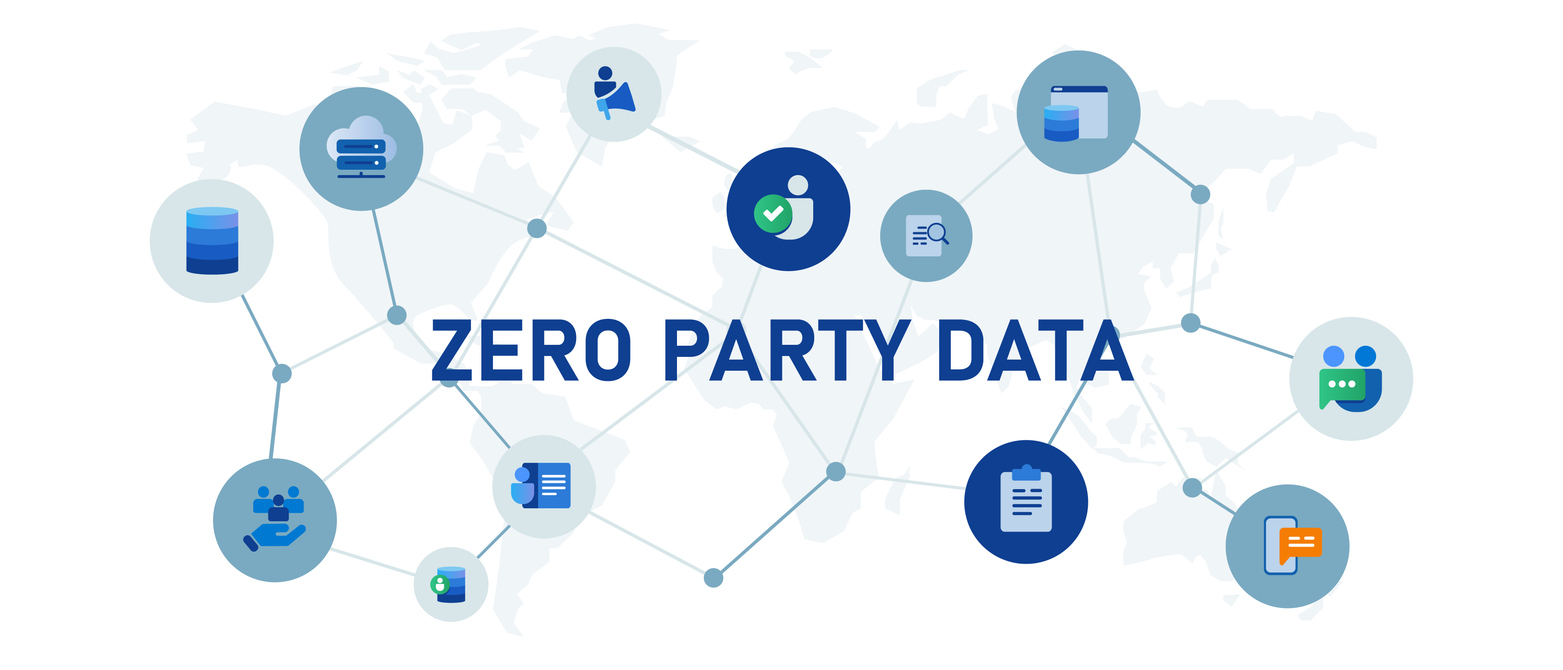
Zero-party data is information that customers intentionally and proactively provide to a business about themselves, such as their preferences, interests, purchase intentions, or communication choices.
Unlike data that a company simply observes from customer behaviour, zero-party data comes directly from the customer.
For example:
- A customer tells an online fashion store their preferred clothing style.
- A website visitor selects their biggest business challenge in a quiz.
- A customer chooses which types of emails they want to receive.
- A shopper tells a beauty brand their skin concerns.
- A new SaaS user selects the features they are most interested in.
The important element is intentional sharing.
The customer knows they are providing the information, and the business can use it to make the customer experience more relevant.
Zero-Party Data Meaning in Simple Terms
Think of it this way:
First-party data tells you what customers do with your business. Zero-party data tells you what customers say they want.
That distinction can be extremely useful for customer personalization.
A customer may visit several running-shoe product pages, for example. Their behaviour suggests they are interested in running shoes. But if the customer tells you, “I run outdoors, need maximum cushioning, and prefer shoes under ₹8,000,” you now have much clearer information about their requirements.
Why Is Zero-Party Data Important?
Zero-party data can support several areas of digital marketing and customer experience.
1. More Relevant Personalization
Personalization becomes easier when customers explicitly tell you what matters to them.
Instead of sending the same message to everyone, businesses can use customer preferences to create more relevant:
- Product recommendations
- Email campaigns
- Offers
- Website content
- Product categories
- Customer journeys
This can make personalization more useful and less dependent on assumptions.
2. Better Customer Insights
Behavioural data can tell you that someone visited a page. Zero-party data can help explain why they are interested.
For example:
“I am looking for a beginner-friendly digital marketing course.”
That statement contains a level of intent that a simple page visit may not reveal.
3. Stronger Customer Relationships
Asking customers about their preferences can turn marketing into a two-way conversation.
Google’s guidance on privacy-focused marketing similarly emphasizes building direct relationships and offering customers a clear value exchange when collecting data.
4. Privacy-Conscious Marketing
Zero-party data can fit naturally into a privacy-first marketing approach because customers actively provide the information.
However, voluntary sharing does not mean businesses can collect or use information without limits. Businesses still need appropriate privacy practices, transparency, security, and compliance with applicable laws.
5. More Useful Marketing Decisions
When customer preferences are collected systematically, businesses can use them to improve:
- Audience segmentation
- Content strategy
- Product development
- Email marketing
- Paid advertising
- CRM workflows
- Customer experience
The goal is not simply to collect more data. It is to collect more useful information.
Zero-Party Data vs First-Party Data
Zero-party data and first-party data are closely related, but they are not identical.
| Factor | Zero-Party Data | First-Party Data |
| Source | Directly and intentionally provided by the customer | Collected directly through a business’s interactions with customers |
| Customer awareness | Customer explicitly knows they are providing the information | Awareness can vary depending on the interaction |
| Typical information | Preferences, intentions, interests, stated needs | Purchases, website interactions, account information, engagement |
| Example | “I prefer email offers for running shoes.” | Customer purchased running shoes |
| Main value | Understanding what customers say they want | Understanding customer relationships and behaviour |
| Personalization | Useful for explicit preference-based personalization | Useful for behavioural and relationship-based personalization |
The two can work together.
For example, an e-commerce company might combine purchase history with answers from a product-preference quiz.
The purchase history shows what the customer bought, while the quiz can reveal what the customer wants next.
Google describes first-party data as information collected directly from customers through a business’s own interactions and emphasizes its role in personalization and privacy-conscious marketing.
Zero-Party Data vs Third-Party Data
Third-party data is generally obtained from external sources rather than directly from a customer’s relationship with your business.
The fundamental difference is the source and relationship.
| Factor | Zero-Party Data | Third-Party Data |
| Collection | Customer intentionally provides it | Obtained from an external organization or source |
| Relationship | Direct customer-brand interaction | Usually indirect |
| Customer control | Generally clearer because the customer actively provides the information | Depends on the source and applicable privacy practices |
| Example | Customer selects preferred product category | External audience data indicating likely interests |
| Typical use | Personalization and customer experience | Audience targeting, research and enrichment |
| Key consideration | Purpose, transparency and privacy | Source transparency, permissions, accuracy and compliance |
Businesses should not treat zero-party data as a shortcut around privacy requirements. The same principles of responsible data handling still matter.
For example, privacy regulators emphasize collecting personal information that is adequate, relevant, and limited to what is necessary for the stated purpose.
Zero-Party Data Examples
There are many practical ways businesses can collect information directly from customers.
1. Preference Quizzes
A skincare company could ask:
- What is your skin type?
- What is your biggest concern?
- What products do you currently use?
- What result are you trying to achieve?
The answers can power personalized recommendations.
2. Product Recommendation Quizzes
An e-commerce brand can ask customers questions about their budget, preferences, requirements, and intended use.
The final result could recommend three suitable products.
3. Customer Surveys
Businesses can ask customers directly about:
- Product satisfaction
- Interests
- Future needs
- Purchase intentions
- Content preferences
- Service expectations
4. Preference Centers
A preference center allows customers to choose what they want from a brand.
For example:
Content preferences:
- Marketing tips
- Industry news
- Product updates
- Offers
Communication preferences:
- SMS
- No promotional messages
Preference centers are also being used to capture customer purchase intent, persona information, channel preferences, and content preferences.
5. Website Forms
A simple form can ask one useful question rather than collecting unnecessary information.
For example:
“What are you looking for today?”
Options:
- SEO services
- Social media marketing
- Google Ads
- Website development
- Marketing consultation
6. Onboarding Questions
SaaS companies can ask new customers about their goals during account setup.
This can help personalize onboarding and recommendations.
7. Loyalty Programs
A loyalty program could ask customers about their preferred categories, shopping interests, birthdays, or communication preferences.
8. Direct Customer Feedback
Customer support conversations, feedback forms, reviews, and direct questions can reveal what customers value and what they want improved.
How Businesses Can Collect Zero-Party Data
The biggest mistake is treating zero-party data collection like a long questionnaire.
Customers are more likely to participate when the process is simple and useful.
Start With One Business Question
Before creating a quiz or survey, ask:
“What information would genuinely improve the customer experience?”
For an online clothing store, it could be style preference.
For a B2B agency, it could be the business’s primary marketing goal.
For a SaaS product, it could be the user’s main use case.
Make the Value Exchange Clear
Customers should understand why they are answering.
For example:
“Answer 4 questions to get your personalized product recommendations.”
That is a much clearer value exchange than simply saying:
“Give us your information.”
Forrester’s research highlights short, simple zero-party data experiences and clear value exchange as important practices.
Keep Questions Relevant
Do not ask for information simply because your CRM has another empty field.
If the answer will not influence marketing, service, recommendations, or customer experience, consider whether you need to collect it.
How to Use Zero-Party Data for Personalization
Collecting information is only the first step.
The real value comes from using customer preferences responsibly.
Product Recommendations
If a customer says they prefer:
- Budget products
- Minimal designs
- Vegan ingredients
your recommendation system can use those preferences to narrow the available products.
Email Marketing
Instead of sending every subscriber the same newsletter, segment emails based on stated interests.
Someone interested in SEO can receive SEO content, while someone interested in paid advertising receives PPC-related content.
Offers
Customer preferences can help businesses make offers more relevant.
For example, a customer who explicitly chooses “new product launches” could receive launch announcements rather than frequent discount messages.
Website Experiences
A website can use customer-selected preferences to guide visitors toward relevant categories, resources, or products.
Content Marketing
Zero-party data can reveal the questions customers actually want answered.
Those insights can influence:
- Blog topics
- Videos
- Guides
- FAQs
- Webinars
- Social media content
This creates a useful connection between customer insights and SEO strategy.
Customer Journeys
A business can create different journeys based on customer needs.
For example:
New visitor → preference quiz → product recommendation → personalized email → relevant offer → repeat purchase
The experience becomes more intentional rather than relying entirely on generic campaigns.
Zero-Party Data Strategy: A Practical Framework
A useful zero-party data strategy does not have to be complicated.
Step 1: Define the Objective
Decide what you want to improve.
Examples:
- Product recommendations
- Lead qualification
- Email personalization
- Customer segmentation
- Content personalization
- Customer retention
Step 2: Identify the Information You Need
Choose only information connected to your objective.
If the goal is product recommendations, focus on product preferences and requirements.
Step 3: Choose the Collection Method
Depending on your business, use:
- Quiz
- Survey
- Form
- Preference center
- Onboarding flow
- Loyalty program
- Interactive website widget
Step 4: Create a Value Exchange
Give customers a reason to participate.
This could be:
- Personalized recommendations
- Exclusive content
- Early access
- Better product discovery
- Relevant offers
- Faster onboarding
Google similarly recommends value exchanges such as product recommendations, early access, restock notifications, and loyalty benefits when businesses build direct customer data relationships.
Step 5: Connect the Data
Store customer preferences in the appropriate CRM, marketing automation platform, customer data platform, or other system.
Make sure the information is organized and usable.
Step 6: Segment Customers
Create useful segments based on customer-provided information.
For example:
- Beginner
- Advanced
- Price-sensitive
- Premium-focused
- Product A interested
- Product B interested
Step 7: Activate the Insights
Use those segments to improve marketing and customer experience.
Step 8: Keep Preferences Updated
Customer preferences can change.
Someone interested in beginner-level content today may want advanced content six months later.
Give customers opportunities to update their choices.
Zero-Party Data for E-commerce
E-commerce businesses can benefit significantly from direct preference information because online shoppers often face too many choices.
A product finder can simplify the buying process.
Imagine an online skincare store asking:
What is your primary concern?
- Dryness
- Acne
- Sensitivity
- Pigmentation
- Anti-ageing
Then:
What is your preferred budget?
- Under ₹500
- ₹500–₹1,000
- ₹1,000–₹2,000
- ₹2,000+
The business now has useful customer insights, while the shopper receives a more focused product experience.
Zero-party data can support:
- Product recommendations
- Cross-selling
- Upselling
- Email segmentation
- Product discovery
- Loyalty programs
- Personalized offers
- Retention campaigns
Forrester has highlighted product recommendation quizzes and other short interactive experiences as practical zero-party data collection methods.
Zero-Party Data for Digital Marketing
Zero-party data should not exist in isolation.
It can become one component of a broader data-driven marketing strategy.
SEO
Customer questions and preferences can reveal topics worth creating content around.
For example, if customers repeatedly identify “SEO for small businesses” as a priority, that insight could inform:
- Blog topics
- Landing pages
- FAQs
- Guides
- Case studies
Email Marketing
Use stated preferences to create more relevant email segments and content.
Social Media Marketing
Customer feedback can reveal themes, problems, and interests that can influence social content.
Paid Advertising
Customer-provided insights can help marketers understand different audience needs and develop more relevant messaging, while platform-specific privacy and advertising requirements still need to be followed.
CRM
CRM systems can store customer preferences alongside interaction and purchase information, creating a more useful customer profile.
Personalization
The strongest approach is often to combine different types of legitimate customer information rather than depending on one data source.
Best Practices for Collecting Zero-Party Data
Follow these principles when building a zero-party data collection strategy:
Ask for Useful Information
Every question should have a reason.
Explain Why You Are Asking
Customers are more comfortable when the purpose is clear.
Provide Value in Return
Make the experience useful rather than making customers feel like they are completing paperwork.
Keep Forms Simple
Start with a few high-value questions.
Respect Privacy
Explain how information will be used and follow applicable privacy requirements.
Avoid Unnecessary Data Collection
More data is not automatically better.
Privacy principles such as data minimization emphasize collecting information that is relevant and necessary for a defined purpose.
Keep Preferences Updated
Allow customers to change their choices.
Do Not Make Personalization Creepy
There is a difference between:
“You told us you prefer running shoes, so here are three new running-shoe options.”
and:
“We noticed you visited running-shoe pages five times this week.”
The first feels like a useful continuation of a conversation. The second may feel overly observant depending on the context.
Good personalization should feel helpful, not intrusive.
Common Zero-Party Data Mistakes to Avoid
Asking Too Many Questions
A 20-question survey can create unnecessary friction.
Start small.
Collecting Data Without a Purpose
If you cannot explain how an answer will improve the customer experience or business process, reconsider collecting it.
Offering No Value
Customers need a reason to participate.
Ignoring Customer Preferences
There is little value in asking customers what they want and then continuing to send irrelevant messages.
Using Outdated Information
Preferences change. Give customers ways to update them.
Making Personalization Feel Intrusive
Use customer-provided information in ways that feel natural and expected.
Treating Consent as a One-Time Event
Customer expectations and privacy choices can change. Build processes that respect those choices and applicable legal requirements. Where consent is the legal basis, privacy guidance generally emphasizes that it should be informed, specific, freely given, and easy to withdraw.
The Future of Zero-Party Data
The future of digital marketing is not simply about collecting more information.
It is increasingly about collecting better information responsibly.
As businesses adapt to changing privacy expectations and a digital environment with fewer traditional tracking signals, direct customer relationships become increasingly important. Google, for example, describes first-party data and privacy-preserving measurement as important components of modern advertising strategies.
Zero-party data adds another valuable layer because it gives customers a voice.
Instead of marketers asking:
“What can we infer about this customer?”
they can also ask:
“What does this customer actually want?”
That shift can make personalization more transparent and customer-focused.
The businesses that benefit from zero-party data will not necessarily be those collecting the most answers. They will be those that ask the right questions, provide genuine value, protect customer information, and actually use the answers to improve the experience.
How DigiPromoters Can Help
Building a useful data-driven marketing system requires more than adding a quiz to a website.
At DigiPromoters, businesses can develop a broader digital marketing strategy around customer insights, SEO, social media, paid advertising, content, and customer personalization.
For example, zero-party data insights can help identify customer segments, understand content interests, improve campaign messaging, and create more relevant customer journeys.
The objective is simple: use meaningful customer information to make digital marketing more relevant while keeping the customer experience and privacy at the centre.
Whether a business is improving its SEO strategy, running paid campaigns, building content, or exploring personalized marketing, customer insights can help turn assumptions into better-informed decisions.
Frequently Asked Questions About Zero-Party Data
1. What is zero-party data?
Zero-party data is information that a customer intentionally and proactively shares with a business, such as their preferences, interests, purchase intentions, or communication choices.
2. What is an example of zero-party data?
A product recommendation quiz is a common example. If a customer tells a skincare brand their skin type and primary concerns to receive personalized recommendations, those answers are zero-party data.
3. What is the difference between zero-party data and first-party data?
Zero-party data is explicitly and intentionally provided by the customer. First-party data is collected directly through a company’s own customer interactions, such as purchases, website activity, account registrations, and engagement.
4. Why is zero-party data important?
It can give businesses direct insight into customer preferences and intentions, supporting more relevant personalization, segmentation, content, offers, and customer experiences.
5. How do companies collect zero-party data?
Common methods include quizzes, surveys, preference centers, onboarding questions, product finders, website forms, loyalty programs, and direct customer feedback.
6. How can zero-party data improve personalization?
Businesses can use stated customer preferences to tailor product recommendations, email content, offers, website experiences, and customer journeys.
7. Is zero-party data better for privacy?
Zero-party data can support privacy-conscious marketing because customers intentionally provide the information. However, businesses still need appropriate transparency, security, data governance, and compliance with applicable privacy laws.
8. How can e-commerce businesses use zero-party data?
E-commerce brands can use product quizzes, preference centers, customer surveys, and product finders to understand customer needs and provide more relevant product recommendations and marketing.
9. What are the challenges of collecting zero-party data?
The main challenges include creating a compelling value exchange, avoiding overly long forms, keeping customer information accurate, protecting data, and using the information responsibly.
10. How can businesses create a zero-party data strategy?
Start by defining a business objective, identify the customer information needed, choose an appropriate collection method, provide a clear value exchange, organize the data, create useful segments, activate the insights, and regularly update customer preferences.
and better-informed marketing decisions.