



Shopping online has become incredibly convenient, but it still has one major limitation: customers cannot physically experience a product before buying it.
You can look at a pair of sunglasses on a screen, but how will they look on your face? You can view a lipstick shade online, but will the colour suit you? You can browse furniture, but will that sofa actually look right in your living room?
Augmented Reality (AR) is helping businesses solve this problem.
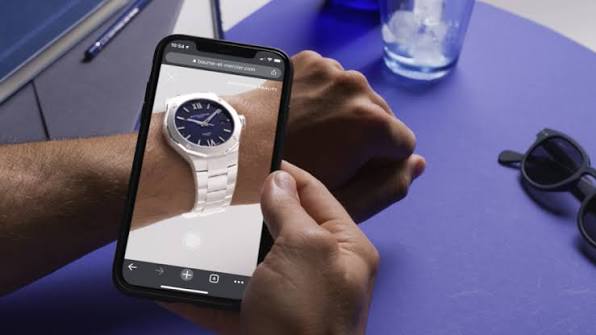
AR filters and virtual try-ons allow customers to interact with products through their smartphones and other devices. Instead of simply looking at a product image, shoppers can use technology to see how a product might look on them or in their environment.
From beauty and fashion to eyewear, jewellery, furniture, and retail, AR shopping experiences are becoming an increasingly interesting part of modern e-commerce and digital marketing.
The technology does more than create an entertaining experience. When implemented properly, it can help customers make more informed purchasing decisions, increase product engagement, and make online shopping feel more interactive.
What Are AR Filters and Virtual Try-Ons?
Augmented Reality filters are digital effects that overlay virtual elements onto a user’s real-world environment, while virtual try-ons use AR technology to help customers visualize products such as clothing, makeup, eyewear, or accessories on themselves before purchasing.
AR does not replace the real world. Instead, it adds digital information or objects to what the user sees through a camera.
For example:
- A beauty customer can virtually apply lipstick.
- A shopper can see how sunglasses look on their face.
- A customer can visualize furniture inside a room.
- A jewellery shopper can preview how earrings or glasses might look.
- A fashion shopper can explore how certain products may appear on them.
This creates a more interactive shopping journey than traditional product photography alone.
Why AR Is Changing Online Shopping
Traditional online shopping depends heavily on product photos, descriptions, reviews, and videos.
These are useful, but customers can still have questions such as:
- Will this look good on me?
- Is this colour right for me?
- Will this furniture fit visually into my room?
- How will these glasses look on my face?
- Does this product match my style?
AR can help answer some of these questions visually.
Instead of asking customers to imagine the result, businesses can give them a way to preview it.
This is particularly useful for products where appearance, size, fit, colour, or visual context influences purchasing decisions.
How AR Virtual Try-Ons Work
Although the technology behind AR can be complex, the customer experience can be very simple.
A typical virtual try-on experience works like this:
Step 1: Customer Opens the AR Experience
The customer may find an AR feature on:
- An e-commerce website
- A mobile app
- A social media platform
- A product page
- A digital advertisement
Step 2: Camera Access Is Enabled
The customer allows the relevant camera access where required.
The system uses the camera view as the environment for the AR experience.
Step 3: AR Technology Detects the Relevant Surface or Feature
Depending on the product, the system may identify:
- Facial features
- Body positioning
- Floors
- Walls
- Tables
- Other surfaces
Step 4: Digital Product Is Overlaid
The selected product is positioned within the camera view.
For example, virtual glasses may be positioned around the user’s eyes.
Step 5: Customer Explores the Product
The customer can move around or change products to compare options.
Step 6: Customer Moves Toward Purchase
After trying the product, the customer can be directed to:
- Add to cart
- Buy now
- Save the product
- Share the experience
- Explore another product
- Contact the business
The fewer unnecessary steps between try and buy, the more useful the experience can become.
AR Filters vs Virtual Try-Ons
These terms are related but are not always the same.
| Feature | AR Filters | Virtual Try-Ons |
| Main purpose | Engagement and interactive experiences | Product visualization |
| Common use | Social media effects, branded experiences | E-commerce and product discovery |
| Product focus | May or may not feature products | Usually product-focused |
| Example | Branded face filter | Virtual sunglasses try-on |
| Primary marketing role | Awareness and engagement | Consideration and conversion |
| Shopping connection | Often indirect | Usually direct |
An AR filter can be designed mainly for entertainment or brand awareness.
A virtual try-on is generally designed to help a customer evaluate a specific product.
However, the two can overlap.
A fashion brand could create a social AR filter that lets users explore a new collection while also directing them toward its online store.
Industries Using AR for Online Selling
AR can be useful across multiple industries.
Beauty and Cosmetics
Beauty is one of the most obvious applications.
Customers can virtually test:
- Lipstick
- Foundation
- Blush
- Eyeshadow
- Hair colours
- Other cosmetic products
This can help shoppers explore different options before making a purchase.
For example, a customer who is unsure between three lipstick shades could preview each one through a virtual try-on experience.
Eyewear
Online eyewear stores can allow customers to see how different frames appear on their faces.
A shopper can compare:
- Round frames
- Square frames
- Rectangle frames
- Different colours
- Different sizes
This makes product discovery more interactive.
Fashion
AR technology can help shoppers visualize clothing and accessories.
Applications can include:
- Clothing
- Shoes
- Jewellery
- Watches
- Bags
- Accessories
However, visual try-on should not be confused with perfect physical fit. AR visualization can help with appearance and selection, but it cannot always guarantee that a physical product will fit exactly as expected.
Furniture and Home Décor
Furniture businesses can use AR to allow customers to visualize products within their homes.
For example:
“See this sofa in your living room.”
The customer can use a smartphone camera to place a digital representation of the sofa within the room.
This can help answer an important question:
Will this product look right in my space?
Jewellery
Jewellery brands can use AR to help customers preview:
- Earrings
- Necklaces
- Rings
- Watches
- Other accessories
Automotive
Automotive brands can use augmented reality to help customers visualize:
- Different vehicle models
- Colours
- Wheels
- Accessories
- Vehicle placement
AR can therefore become part of the research and consideration stage of a longer buying journey.
Benefits of AR Filters and Virtual Try-Ons
1. More Interactive Product Discovery
Traditional shopping can involve scrolling through product photos.
AR turns product discovery into an interactive experience.
Instead of simply viewing a product, customers can interact with it.
2. Greater Customer Confidence
One reason people hesitate to purchase online is uncertainty.
AR can reduce some visual uncertainty by allowing customers to preview a product.
For example:
“Will these glasses suit me?”
can become:
“Let me try them virtually.”
This does not remove every purchasing concern, but it can make the decision process more informative.
3. Better Product Engagement
An interactive experience can encourage customers to spend more time exploring products.
A shopper may try several:
- Colours
- Styles
- Sizes
- Designs
That creates more opportunities for product discovery.
4. Differentiated Brand Experience
Many online stores still rely on the familiar combination of:
Product image + description + price + reviews
An effective AR experience can give a brand another way to differentiate its digital shopping journey.
5. Social Media Engagement
AR filters can also support social media marketing.
Customers may:
- Try a branded filter
- Share their experience
- Tag the brand
- Compare products
- Create user-generated content
This can connect product discovery with social engagement.
6. Potentially More Informed Purchasing Decisions
When customers can visualize products in a more realistic context, they may have additional information before purchasing.
However, AR should complement—not replace—product descriptions, dimensions, reviews, return policies, and other important purchase information.
How AR Can Help Reduce Online Shopping Uncertainty
One of the biggest challenges in e-commerce is the gap between digital representation and physical reality.
Customers cannot physically touch or examine the product through a screen.
AR can help bridge part of this gap.
Consider a furniture shopper.
A standard product page may show:
Sofa — ₹45,000
with several photographs.
An AR experience could allow the shopper to visualize that sofa in their living room.
Now the customer can consider:
- Does the colour work with the room?
- Does the design look suitable?
- Does the furniture appear too large?
- Does it fit the visual style of the space?
The customer still needs accurate measurements, but AR provides another layer of information.
AR Virtual Try-On and Customer Personalization
AR experiences can also support personalized shopping experiences.
For example, a customer may:
- Open a product page.
- Try a product virtually.
- Compare multiple options.
- Save a preferred product.
- Receive recommendations for similar products.
- Add the selected product to the cart.
The business can use the customer’s interactions—subject to appropriate privacy practices—to understand product interest and improve the customer journey.
This creates a connection between:
AR → Product Discovery → Personalization → Conversion
The technology becomes more valuable when it is integrated into the broader digital marketing strategy rather than operating as an isolated feature.
How Businesses Can Use AR in Digital Marketing
AR does not have to be limited to an e-commerce product page.
Businesses can use it throughout the customer journey.
Awareness
Create an AR filter connected to a product launch or campaign.
Engagement
Encourage customers to interact with products through an immersive experience.
Consideration
Let shoppers compare different products virtually.
Conversion
Connect the experience directly to product pages and purchasing options.
Retention
Use AR as part of new product launches, loyalty campaigns, or seasonal promotions.
This creates a potential marketing journey:
See → Interact → Explore → Try → Compare → Purchase
AR Filters for Social Media Marketing
Social media platforms have helped make AR filters familiar to everyday users.
Brands can create filters around:
- Product launches
- Festivals
- Campaigns
- Fashion collections
- Beauty products
- Brand challenges
- Events
For example, a fashion brand launching a new sunglasses collection could create an interactive experience where users virtually try different frames.
The experience can then encourage users to explore the collection.
The key is to make the AR filter useful or entertaining, rather than simply placing a logo over the user’s face.
A branded experience should give users a reason to interact with it.
How to Create an AR Virtual Try-On Strategy
Launching AR technology requires more than creating an impressive effect.
Step 1: Choose the Right Product
Not every product needs AR.
Start with products where visualization can solve a genuine customer problem.
Good candidates may include:
- Eyewear
- Cosmetics
- Jewellery
- Furniture
- Accessories
- Home décor
Step 2: Identify the Customer Problem
Ask:
What uncertainty does the customer have before buying?
If AR does not solve a meaningful problem, it may become an expensive novelty.
Step 3: Choose the Right Platform
Consider whether customers are more likely to use the experience through:
- Website
- Mobile app
- Social media
- QR code
- Digital advertisement
Step 4: Keep the Experience Simple
Customers should not have to complete several complicated steps before trying a product.
Ideally:
Click → Camera → Try → Shop
Step 5: Connect AR to Commerce
The experience should make it easy to move from trying a product to purchasing it.
Include relevant actions such as:
- Shop now
- Add to cart
- View product
- Compare
- Save
Step 6: Test the Experience
Test across:
- Different smartphones
- Browsers
- Lighting conditions
- Camera qualities
- Internet connections
A beautiful AR experience that loads slowly or works poorly can hurt the customer experience.
Step 7: Measure Performance
Track whether the experience is actually contributing to business goals.
Metrics to Measure AR Marketing Performance
Businesses should measure more than the number of people who opened an AR filter.
Useful metrics can include:
AR Engagement Rate
How many users interact with the experience?
Product Interaction
Which products or variations are tried most often?
Click-Through Rate
How many users move from the AR experience to the product page?
Add-to-Cart Rate
How often do users who interact with AR add the product to their cart?
Conversion Rate
How many users ultimately purchase?
Engagement Time
How long do customers interact with the experience?
Shares and User-Generated Content
For social campaigns, measure how often customers share the experience.
Return Behaviour
Where appropriate, businesses can examine whether AR-assisted purchases show different return patterns from comparable purchases, while accounting for other factors.
The most important metric depends on the campaign objective.
An awareness campaign may focus on reach and engagement, while an e-commerce implementation may focus more heavily on product interactions and conversions.
Common Mistakes to Avoid
1. Using AR Just Because It Is Trendy
Technology should solve a customer problem.
Do not build AR simply because competitors are talking about it.
2. Making the Experience Too Complicated
If customers need multiple downloads or complicated instructions, many may abandon the experience.
3. Poor Product Accuracy
If the virtual product looks significantly different from the real product, customer expectations can become misleading.
4. Ignoring Product Information
AR should complement:
- Product dimensions
- Materials
- Ingredients
- Pricing
- Reviews
- Delivery information
- Return policies
5. Forgetting Mobile Performance
Many AR experiences are designed for smartphones.
Slow loading times or poor camera performance can create friction.
6. Not Providing a Clear Next Step
After trying a product, customers should know what to do next.
For example:
Try → Compare → Add to Cart
is clearer than ending the experience without a shopping action.
7. Treating AR as a Replacement for Human Experience
AR can improve digital product visualization, but customers may still want human support for complex purchases.
Privacy and AR Shopping Experiences
AR experiences often involve cameras and, depending on implementation, may process information related to a user’s face, body, environment, or device.
Businesses should therefore take privacy seriously.
Before launching an AR experience, consider:
- What information is collected?
- Is the camera required?
- Is any imagery stored?
- Why is the information needed?
- How long is it retained?
- Is it shared with third parties?
- What privacy notices are required?
- What choices are available to users?
The exact requirements depend on the technology, jurisdiction, and type of information involved.
A good AR experience should be engaging without making customers uncertain about what is happening to their information.
The Future of AR in E-commerce
AR is part of a broader shift toward more interactive digital commerce.
As smartphones, cameras, 3D product models, computer vision, and spatial technologies continue to develop, online shopping experiences can become increasingly visual and interactive.
Future applications may include:
- More realistic virtual try-ons
- Improved product visualization
- AI-powered product recommendations combined with AR
- Interactive 3D shopping
- Virtual showrooms
- AR-powered home design
- Personalized shopping experiences
- Social commerce experiences
The long-term opportunity is not simply to make shopping more entertaining.
It is to make digital shopping more informative and closer to the confidence customers get from seeing a product in the real world.
How DigiPromoters Can Help
AR works best when it is connected to a wider digital marketing strategy.
At DigiPromoters, businesses can explore how interactive technologies such as AR can work alongside SEO, social media marketing, paid advertising, content marketing, website optimization, and e-commerce strategies.
For example, an AR campaign can be promoted through social media and paid advertising, supported by optimized product pages, and connected to a broader customer journey.
The objective is not to use technology simply because it looks impressive.
The objective is to use technology where it can make the customer journey more engaging, informative, and useful.
Conclusion
Online shopping has solved many of the traditional challenges of buying from a distance, but one challenge remains: customers cannot physically experience most products before purchasing them.
AR filters and virtual try-ons offer a new way to reduce that gap.
They allow customers to visualize products, explore different options, interact with brands, and make more informed decisions.
For businesses, AR can become more than a marketing gimmick. When integrated properly, it can support product discovery, customer engagement, personalization, social media campaigns, and e-commerce conversion journeys.
But successful AR is not about having the most complicated technology.
It is about answering a simple question:
Does this experience help the customer make a better or easier purchase decision?
If the answer is yes, AR can become a valuable part of a modern digital commerce strategy.
The future of online shopping may not be about choosing between digital and physical experiences. It may be about combining the convenience of digital commerce with some of the confidence and interaction of shopping in the real world.