




Most businesses want their customers to trust them. They invest in polished advertisements, professional graphics, product photography, influencer campaigns, and carefully written marketing messages.
But sometimes, the content that builds the strongest connection with an audience is much simpler.
It might be a quick video of your team preparing an order. A founder explaining how a product is made. A designer working on a project. A restaurant showing what happens in the kitchen before opening. Or a team member sharing what a normal day at the company actually looks like.
This is behind-the-scenes video content.
Unlike traditional advertisements, behind-the-scenes videos give people a look at the humans, processes, effort, and personality behind a brand. Instead of simply telling customers that your business is trustworthy, you give them something they can see for themselves.
For businesses competing in crowded digital markets, that transparency can make a significant difference.
What Is Behind-the-Scenes Video Content?
Behind-the-scenes video content shows audiences what happens behind the finished product, service, campaign, or customer experience.
Instead of showing only the final result, you show the process that creates it.
For example:
- A clothing brand showing how an outfit is designed
- A restaurant showing food preparation
- A marketing agency showing its creative process
- A salon introducing its team
- A manufacturer showing production
- A photographer preparing for a shoot
- A startup showing its workspace
- A founder explaining how the business started
- An e-commerce brand packing customer orders
The purpose isn’t necessarily to create a perfectly polished commercial.
The purpose is to make the brand feel more real.
That is why behind-the-scenes content has become an important part of modern video marketing for businesses.
Why Does Behind-the-Scenes Content Build Trust?
Trust is difficult to create with a single advertisement.
An advertisement tells people what a company wants them to know.
Behind-the-scenes content can show people how the company actually works.
That distinction matters.
When customers see real people, real processes, real work, and real decision-making, they get more context about the business.
Instead of:
“We provide high-quality products.”
You can show the product being made, tested, packaged, or prepared.
Instead of:
“Our team is highly experienced.”
You can introduce the people working on customer projects and show how they solve real problems.
Instead of:
“We care about our customers.”
You can show how your team handles customer questions, prepares orders, or improves its service.
The content becomes evidence rather than just a claim.
Behind-the-Scenes Content vs Traditional Ads
Traditional advertising still has an important place in marketing. Ads can be excellent for reaching specific audiences, promoting offers, generating leads, and driving conversions.
But advertisements are naturally promotional.
Behind-the-scenes content serves a different purpose.
| Behind-the-Scenes Content | Traditional Advertising |
| Shows the process | Promotes the result |
| Human-centered | Brand-centered |
| Often feels more natural | Usually more polished |
| Builds familiarity | Drives a specific marketing objective |
| Shows people and personality | Highlights products, services, or offers |
| Can strengthen authenticity | Can communicate benefits quickly |
| Often encourages connection | Often encourages action |
The two approaches don’t have to compete.
In fact, the strongest social media marketing strategy can use both.
Ads can help people discover and buy from your business, while behind-the-scenes videos can help them understand and trust the brand.
1. People Want to Know Who Is Behind a Brand
A company logo doesn’t have a personality.
People do.
Customers often become more comfortable with a business when they can see the people behind it.
This is especially important for service businesses.
Imagine choosing between two digital marketing agencies.
One website says:
“We provide result-driven digital marketing solutions.”
The other agency regularly shares videos showing:
- Team meetings
- Campaign planning
- Content creation
- SEO research
- Client strategy sessions
- Team members explaining marketing concepts
The second business gives potential customers more opportunities to understand the people they may eventually work with.
That familiarity can make the brand feel more approachable.
2. It Makes Your Brand Feel Human
One of the biggest advantages of behind-the-scenes videos is that they humanize a business.
A polished advertisement can sometimes feel distant.
A short video of an employee preparing an order, laughing with a colleague, or explaining their role can make the company feel more relatable.
This doesn’t mean every video needs to be casual or unprofessional.
It means your audience gets to see the humans behind the brand.
For example, a bakery could show:
Morning: Employees preparing ingredients.
Afternoon: Fresh products coming out of the oven.
Evening: The team preparing the shop for the next day.
None of these videos needs a complicated script.
The story is simply:
“This is what happens behind the products you see.”
3. Transparency Can Strengthen Credibility
Customers naturally have questions.
Where is the product made?
Who creates it?
How does the service work?
What happens after I place an order?
What does the company actually do?
Behind-the-scenes content can answer some of these questions visually.
For example, an e-commerce brand can show its packaging process.
A customer may see:
- The order being received.
- The product being checked.
- The package being prepared.
- Quality being inspected.
- The parcel being handed over for delivery.
That simple video can communicate care and attention without requiring a long sales pitch.
4. It Shows the Work Behind the Result
Customers usually see the final product.
They don’t always see the effort behind it.
A finished restaurant dish may take hours of preparation.
A professional video may require scripting, filming, editing, lighting, and revisions.
A website may require planning, design, development, testing, and optimization.
A custom product may involve sourcing, manufacturing, quality control, packaging, and shipping.
Behind-the-scenes videos reveal this invisible work.
That can increase appreciation for the product or service because customers understand what goes into creating it.
5. It Creates Authentic Storytelling Opportunities
Good marketing isn’t always about selling.
Sometimes it is about telling the story behind the business.
Consider a startup founder who records a short video saying:
“We started this business from a small room with three people. Today, we’re working with customers across multiple cities.”
That story gives the audience something to connect with.
Another business might share:
“We tested seven versions of this product before deciding on the final formula.”
That is more interesting than simply saying:
“Our product is high quality.”
The story provides context.
6. Behind-the-Scenes Videos Can Improve Social Media Engagement
Short-form content platforms are built around video discovery and engagement.
People can interact with content by:
- Watching
- Liking
- Commenting
- Sharing
- Saving
- Visiting a profile
- Sending a message
Behind-the-scenes videos can give audiences reasons to interact because they often create curiosity.
For example:
“Guess how many attempts it took us to get this shot?”
or:
“Here’s what customers don’t see when they order from us.”
or:
“A day inside our marketing agency.”
These concepts create an information gap that encourages people to keep watching.
The key is not to manufacture curiosity artificially.
The video still needs to deliver something valuable or interesting.
7. It Helps Customers Remember Your Brand
People are exposed to enormous amounts of content every day.
A generic promotional message can easily be forgotten.
A recognizable person, interesting story, funny moment, or unusual process can be more memorable.
For example, a coffee shop could consistently feature its barista preparing signature drinks.
Over time, viewers may start recognizing the people and personality of the business.
The brand becomes more than a logo.
It becomes an experience.
What Types of Behind-the-Scenes Videos Should Businesses Create?
There is no single format that works for every business.
Here are practical ideas that can be adapted to different industries.
A Day in the Life
Show what a normal day looks like inside your business.
Examples:
- A day at a digital marketing agency
- A day in a restaurant
- A day at a salon
- A day with a photographer
- A day running an e-commerce business
Product Creation
Show how your products are created.
This could include:
- Manufacturing
- Designing
- Testing
- Packaging
- Quality checks
- Preparation
Order Packing
This is particularly useful for e-commerce brands.
Show the process from receiving an order to preparing it for delivery.
Team Introductions
Introduce the people behind the company.
Instead of simply writing employee names on your website, create short videos where they explain:
- Their role
- What they do
- What they enjoy about the company
- A fun fact
- Their expertise
Office or Workspace Tours
Give audiences a quick look at where your team works.
This can make a company feel more approachable and transparent.
Project Before-and-After
Show how a project develops from beginning to completion.
This works particularly well for:
- Designers
- Interior businesses
- Marketing agencies
- Construction companies
- Photographers
- Video production companies
- Beauty businesses
Mistakes and Lessons
Not every behind-the-scenes moment has to look perfect.
A business can sometimes share what went wrong and what the team learned.
However, be thoughtful about what you share. Authenticity does not mean exposing confidential information or damaging your professional reputation.
Behind-the-Scenes Content Ideas for Different Businesses
For Digital Marketing Agencies
A digital marketing agency like DigiPromoters can create videos showing:
- Content planning
- Keyword research
- Social media planning
- Website audits
- Team brainstorming
- Video production
- Campaign setup
- Creative meetings
- Content calendars
- Reporting and analysis
For example:
“What happens before we publish a social media post?”
The video could show research, content planning, design, approval, scheduling, and publishing.
This demonstrates expertise while giving potential clients a look into the agency’s working process.
For Restaurants
Restaurants can show:
- Ingredient preparation
- Chef routines
- Kitchen preparation
- New menu testing
- Plating
- Staff preparation
- Customer-favorite dishes
For Fashion Brands
Fashion brands can show:
- Design sketches
- Fabric selection
- Photoshoot preparation
- Styling
- Model preparation
- Packaging
- New collection development
For Beauty Businesses
Beauty brands and salons can create:
- Product demonstrations
- Treatment preparation
- Workspace setup
- Team introductions
- Before-and-after processes
- Client experience content
For Startups
Startups have a unique opportunity because audiences often enjoy following the journey.
Content can include:
- Product development
- Team-building
- Founder stories
- Early challenges
- Office setup
- New milestones
- Product testing
How to Make Behind-the-Scenes Videos Without Looking Unprofessional
Authenticity does not mean poor quality.
You don’t need a Hollywood production, but you should still pay attention to basic presentation.
Use Good Lighting
Natural light can work extremely well.
If you’re filming indoors, make sure the subject is clearly visible.
Keep the Audio Clear
People may forgive average video quality.
Poor audio is much harder to tolerate.
Use a quiet environment or an external microphone when possible.
Start With a Strong Hook
Don’t begin every video with:
“Hi guys, welcome back to our page…”
Instead, create immediate curiosity.
Examples:
- “Here’s what customers never see.”
- “This is what happens before your order leaves us.”
- “Ever wondered how we create this?”
- “Here’s what goes into making one of our products.”
- “A lot happens before we publish a campaign.”
Keep It Focused
One video should communicate one main idea.
Don’t try to explain your entire company in 30 seconds.
Don’t Over-Script Everything
A clear structure is useful, but overly rehearsed content can sometimes remove the natural personality that makes behind-the-scenes content effective.
Should Behind-the-Scenes Videos Be Completely Raw?
Not necessarily.
There is a difference between authentic and careless.
You can edit a behind-the-scenes video while keeping it natural.
For example, you can:
- Remove unnecessary pauses
- Add captions
- Improve audio
- Cut repetitive sections
- Add relevant B-roll
- Use simple transitions
- Add your brand identity
- Include a clear call to action
The goal is to preserve the real story while making it easy to watch.
How Often Should Businesses Post Behind-the-Scenes Content?
There is no universal number.
The right frequency depends on your resources and overall content strategy.
A business could use a simple content mix such as:
- Educational content
- Behind-the-scenes content
- Customer stories
- Product/service content
- Entertainment or relatable content
- Promotional content
This prevents your social media presence from becoming one long advertisement.
The most important factor is consistency.
It is better to publish useful content consistently than to create ten videos one week and disappear for the next month.
Common Mistakes With Behind-the-Scenes Content
Making Everything About the Business
Your audience cares about your business, but primarily because of what your business can do for them.
Connect behind-the-scenes content to customer value.
Sharing Boring Footage
“Behind the scenes” isn’t automatically interesting.
There needs to be a story, process, person, transformation, or insight.
Trying Too Hard to Look Authentic
Ironically, forcing authenticity can make content feel less authentic.
Let real personalities appear naturally.
Revealing Confidential Information
Don’t show:
- Customer data
- Passwords
- Private documents
- Confidential strategies
- Sensitive financial information
- Private conversations
Transparency should always have boundaries.
Forgetting the Brand
Behind-the-scenes content can be casual while still reflecting your brand’s values and personality.
How Behind-the-Scenes Content Fits Into a Social Media Marketing Strategy
Behind-the-scenes content should not exist in isolation.
It works best as part of a broader social media marketing strategy.
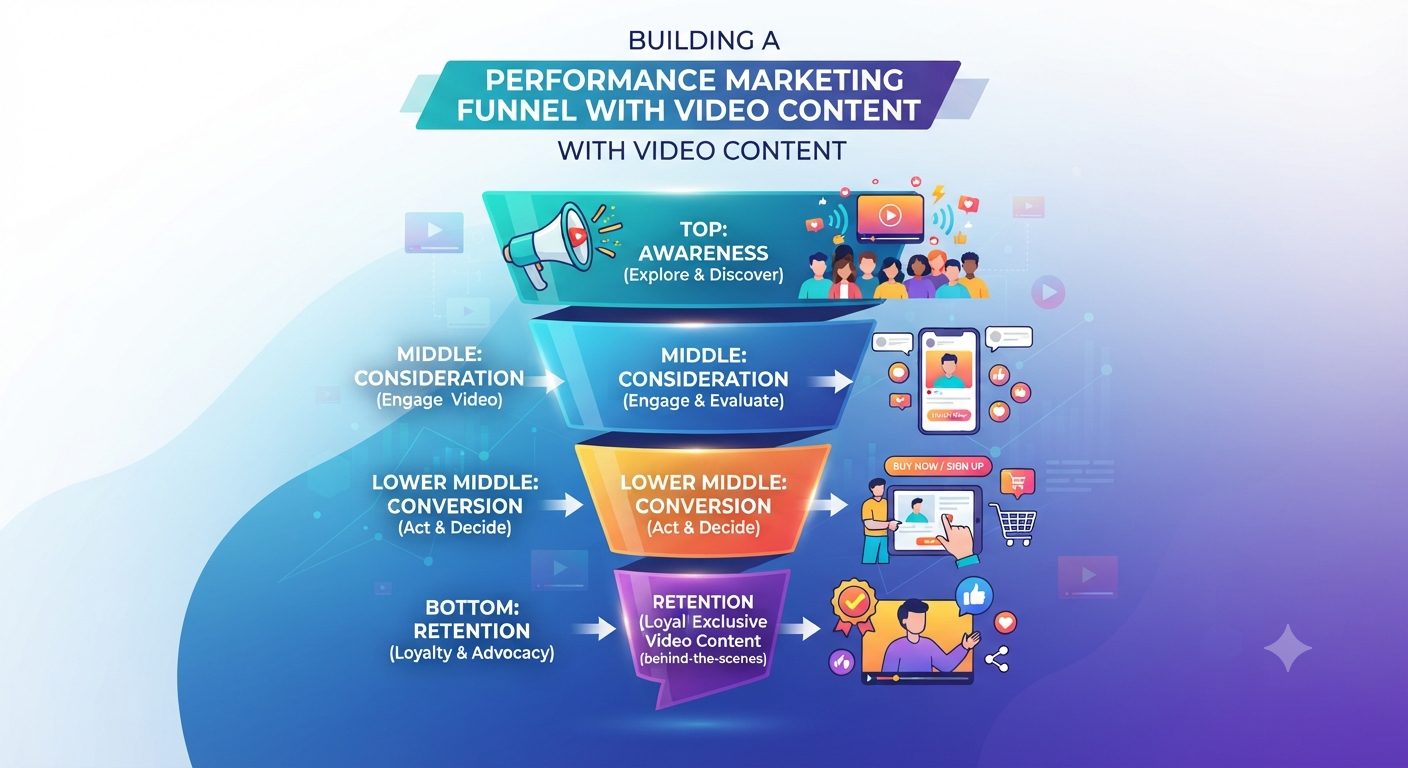
A simple content funnel might look like this:
Discovery → Trust → Consideration → Conversion
Short educational videos can attract new audiences.
Behind-the-scenes content can help build familiarity and trust.
Customer testimonials can provide social proof.
Product or service content can explain the offer.
A strong CTA can then encourage the viewer to take the next step.
This approach creates a more balanced content ecosystem.
Behind-the-Scenes Content Is Not a Replacement for Ads
It is important to understand this distinction.
Behind-the-scenes content can build trust, but that doesn’t mean advertisements are unnecessary.
Ads can be useful when you want to:
- Reach a specific audience
- Promote an offer
- Generate leads
- Drive website traffic
- Retarget potential customers
- Promote a product launch
Organic behind-the-scenes content can support those campaigns by strengthening brand familiarity.
A potential customer may see your advertisement and later visit your social profile.
If they find real people, useful information, customer experiences, and behind-the-scenes videos, the brand may feel more credible than one that only publishes advertisements.
How DigiPromoters Can Help Your Brand Use Video Strategically
Creating a video occasionally is easy.
Building a consistent video content system is much harder.
Businesses need to decide:
- What should we post?
- Who are we creating it for?
- Which platform should we use?
- What should the videos communicate?
- How often should we publish?
- How do we measure performance?
- Which content should be promoted through ads?
This is where a strategic approach matters.
DigiPromoters helps businesses build stronger digital and social media presences through services such as social media marketing, content strategy, video marketing, short-form video content, brand growth, and lead-generation campaigns.
Instead of treating every video as an isolated post, the goal is to build content that supports the larger customer journey.
Final Thoughts: Show the Story Behind the Brand
Customers don’t only want to know what you sell.
They increasingly want to understand who you are, how you work, and what makes your business different.
Behind-the-scenes video content gives brands a simple way to show those things.
It can introduce your team, demonstrate your process, reveal the effort behind your products, share your company’s personality, and create stronger connections with potential customers.
And the best part?
You don’t always need an expensive production setup.
A smartphone, good lighting, clear audio, a useful idea, and a consistent strategy can be enough to start.
The goal isn’t to make every video perfect.
The goal is to make your brand feel real.
If your business wants to build trust through social media, short-form video, and authentic content, DigiPromoters can help you develop a strategy that turns behind-the-scenes moments into meaningful brand experiences and business opportunities.
Ready to show the people and process behind your brand? Connect with DigiPromoters and start building a video strategy your audience can actually connect with.
Frequently Asked Questions
1. What is behind-the-scenes video content?
Behind-the-scenes video content shows audiences what happens behind a business’s products, services, people, projects, or customer experience. It can include production, team activities, preparation, packaging, planning, and day-to-day operations.
2. Why is behind-the-scenes content effective for marketing?
It can make a brand feel more human and transparent. Instead of relying only on promotional claims, businesses can show their processes, people, and personality, helping potential customers understand what happens behind the final product or service.
3. Is behind-the-scenes content better than advertising?
They serve different purposes. Behind-the-scenes content can help build familiarity and trust, while advertising can help businesses reach targeted audiences, promote offers, and generate specific actions. A strong marketing strategy can use both.
4. What should I show in a behind-the-scenes video?
You can show product creation, packaging, team activities, project preparation, customer-service processes, office life, content creation, product testing, or the story behind a product or service.
5. Do behind-the-scenes videos need professional equipment?
Not always. A smartphone with good lighting and clear audio can be enough to start. The most important factors are the idea, storytelling, clarity, and value of the content.
6. Can small businesses use behind-the-scenes content?
Absolutely. Small businesses can use behind-the-scenes videos to introduce their team, demonstrate their products, explain their process, show their workspace, and create a more personal relationship with local or online customers.
7. How often should I post behind-the-scenes videos?
There is no fixed number that works for every business. Start with a frequency you can maintain consistently and combine behind-the-scenes videos with educational, promotional, customer-focused, and entertaining content.
8. Can behind-the-scenes content help generate leads?
Yes, indirectly and sometimes directly. It can build familiarity and trust, which can influence purchasing decisions. Businesses can also include relevant calls to action, such as visiting a website, sending a message, booking a consultation, or exploring a product.
9. Should behind-the-scenes content be edited?
Light editing is usually helpful. Captions, clean audio, cuts, B-roll, and simple branding can improve the viewing experience while still keeping the content natural and authentic.