


Imagine a potential customer visiting your website at 11:47 PM.
They are interested in your service. They have a few questions. They are comparing options and may be ready to enquire—but your sales team is offline.
By the time someone responds the next morning, that visitor may have already moved to a competitor.
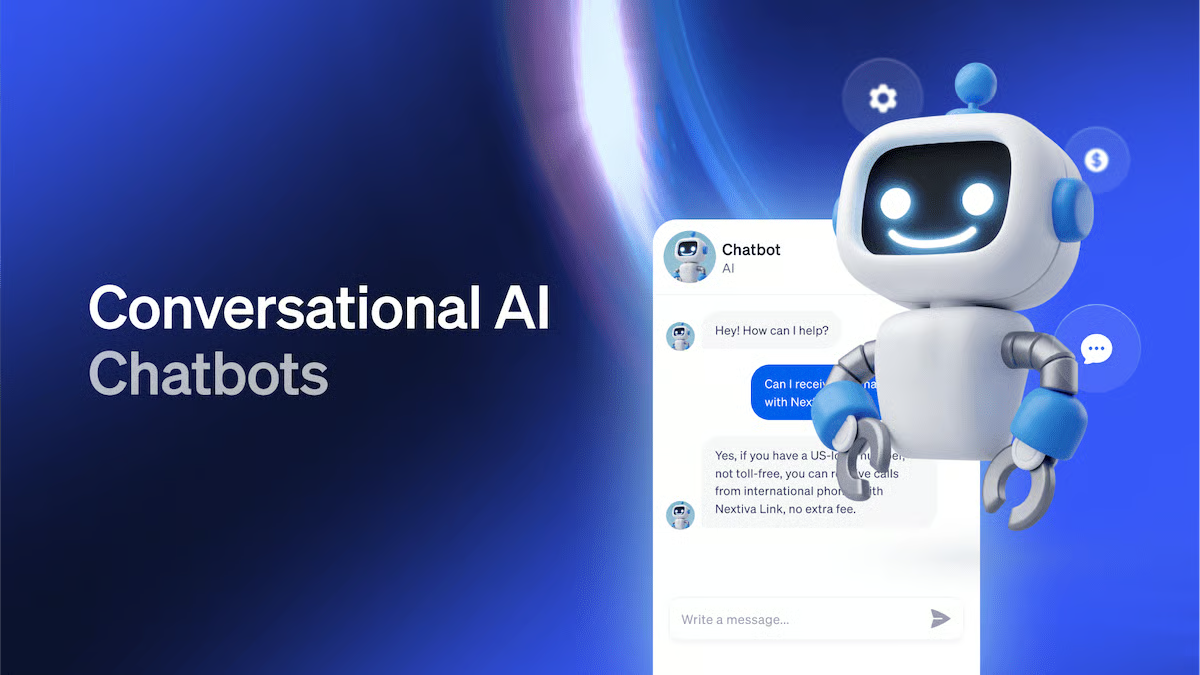
This is where conversational AI chatbots can make a difference.
Unlike traditional website chat widgets that rely on fixed menus and predefined responses, conversational AI chatbots can understand questions in natural language, provide relevant information, qualify prospects, and guide visitors toward the next step.
For businesses, this creates an opportunity to turn more website traffic into meaningful conversations and potential leads—without requiring a sales representative to be available every minute of the day.
The goal is not to replace human sales teams. It is to make sure valuable website visitors do not leave simply because nobody was available to respond.
What Are Conversational AI Chatbots?
Conversational AI chatbots are AI-powered software systems that interact with users through natural-language conversations. They can understand questions, provide relevant responses, collect information, qualify prospects, and guide users toward actions such as booking a consultation or submitting an enquiry.
Traditional chatbots often work through predefined decision trees:
Choose an option → Select a service → Fill out a form.
Conversational AI is designed to handle more flexible interactions.
A visitor might ask:
“I run a small e-commerce business and need help getting more organic traffic. Can you tell me what services you offer?”
Instead of forcing the visitor through several menus, an AI chatbot can respond conversationally, explain relevant services, ask qualifying questions, and guide the visitor toward an enquiry.
That difference can make website interactions feel more natural.
Why Website Visitors Don’t Always Become Leads
Getting website traffic is only one part of digital marketing.
A business might invest in:
- SEO
- Google Ads
- Social media
- Content marketing
- Influencer marketing
- Email marketing
But traffic does not automatically become leads.
Visitors may leave because:
- They cannot find the information they need.
- They have questions about pricing.
- They are unsure whether a service is suitable for them.
- They do not want to fill out a long form.
- They want an immediate answer.
- They are browsing outside business hours.
- They are comparing several providers.
- They are not ready to make a phone call.
A conversational AI chatbot can address some of these friction points by giving visitors another way to interact with the business.
Instead of asking the visitor to search through multiple pages, the chatbot can help them find relevant information through a conversation.
How Conversational AI Chatbots Turn Visitors Into Leads
A chatbot does more than answer questions when it is designed as part of a lead-generation system.
It can support several stages of the customer journey.
1. Start the Conversation
A website visitor may not be ready to complete a contact form.
A simple prompt such as:
“What are you looking for today?”
can create a low-friction opportunity to start a conversation.
The visitor can respond in their own words rather than immediately providing personal information.
2. Understand Visitor Intent
The chatbot can ask relevant follow-up questions.
For example:
“Are you looking for SEO, paid advertising, social media management, or a complete digital marketing solution?”
The visitor’s response provides information about their needs.
3. Qualify Potential Leads
Once a conversation begins, the chatbot can collect useful qualifying information such as:
- Business type
- Service required
- Main marketing objective
- Approximate budget range
- Current website
- Timeline
- Location
- Contact details
Not every visitor needs to answer every question.
The conversation should adapt according to the visitor’s responses.
4. Recommend the Next Step
Once the chatbot understands what the visitor needs, it can guide them toward an appropriate action.
For example:
- Book a consultation
- Request a quote
- Submit contact details
- Schedule a demo
- Speak with a sales representative
- Download a relevant resource
This creates a bridge between website conversation and lead generation.
5. Capture the Lead
If the visitor is interested, the chatbot can request relevant contact information.
For example:
“Would you like our team to discuss this with you? You can leave your name and email, and we’ll get back to you.”
This can feel more natural than presenting a generic contact form immediately.
Conversational AI Chatbot vs Traditional Chatbot
Not every chatbot uses artificial intelligence in the same way.
| Feature | Traditional Chatbot | Conversational AI Chatbot |
| Responses | Predefined | AI-generated or AI-assisted |
| Conversation flow | Usually fixed | More flexible |
| Natural-language understanding | Limited | More advanced |
| Handling unexpected questions | Often difficult | Can handle broader queries |
| Personalization | Basic | Can adapt based on conversation context |
| Lead qualification | Usually rule-based | Can be more conversational |
| Follow-up questions | Predefined | Can adapt to responses |
| Customer experience | Menu-driven | More conversational |
Traditional chatbots can still be useful for simple tasks.
For example, if a business only needs to answer:
“What are your business hours?”
a simple chatbot may be enough.
But if visitors ask complex questions about services, pricing, requirements, or recommendations, conversational AI can provide a more flexible experience.
How AI Chatbots Qualify Leads 24/7
One of the biggest advantages of conversational AI for lead generation is availability.
Your website does not close at 6 PM.
People can visit at:
- 9 AM
- 2 PM
- 11 PM
- Weekends
- Holidays
A conversational AI chatbot can remain available throughout these periods.
Consider a visitor who arrives at midnight and asks:
“Do you provide Google Ads management for local businesses?”
The chatbot can answer the question and continue:
“Yes. Are you currently running Google Ads, or would this be your first campaign?”
Based on the response, it can ask another relevant question.
This creates a basic qualification process even when a human salesperson is unavailable.
The chatbot can then collect contact information or direct the visitor toward a booking option.
What Questions Should an AI Lead-Generation Chatbot Ask?
The best questions depend on the business.
A digital marketing agency might ask:
Business Information
- What type of business do you operate?
- What industry are you in?
- Do you currently have a website?
Marketing Goals
- What are you trying to achieve?
- Do you want more leads, sales, traffic, or brand awareness?
- Which marketing channels are you currently using?
Service Requirements
- Are you interested in SEO?
- Google Ads?
- Social media marketing?
- Website development?
- Complete digital marketing?
Budget and Timeline
Where appropriate, the chatbot can ask:
- Do you have an approximate monthly marketing budget?
- When would you like to start?
Contact Information
Once the visitor has demonstrated sufficient interest:
- Name
- Phone number
- Business website
The important principle is timing.
Asking for a phone number before providing any useful information can create friction.
How Conversational AI Improves Customer Experience
Lead generation should not come at the expense of customer experience.
A chatbot can improve the website experience when it helps visitors accomplish something faster.
Faster Answers
Visitors do not always want to browse through multiple pages to find a simple answer.
Easier Navigation
A chatbot can direct visitors toward relevant:
- Services
- Products
- Blog articles
- Pricing information
- Resources
- Contact options
Personalized Conversations
A visitor looking for SEO services should not necessarily receive the same conversation as someone looking for website development.
AI can use the conversation context to make the interaction more relevant.
Reduced Friction
Instead of completing a long form, a visitor can answer a few questions conversationally.
That can make the initial interaction feel easier.
Conversational AI Chatbots for Different Types of Businesses
AI chatbots are not limited to digital marketing agencies.
E-commerce
An online store can use AI chatbots to help shoppers:
- Find products
- Compare options
- Understand product features
- Answer shipping questions
- Recommend products
- Recover buying intent
- Guide visitors toward checkout
For example:
“I’m looking for headphones under ₹3,000 that are comfortable for long work sessions.”
A conversational system could use those preferences to guide the shopper toward suitable products.
SaaS Companies
SaaS businesses can use chatbots to:
- Explain product features
- Answer pricing questions
- Qualify prospects
- Recommend plans
- Schedule demos
- Guide trial users
Real Estate
Real estate businesses can ask visitors about:
- Preferred location
- Property type
- Budget
- Buying timeline
- Number of bedrooms
The chatbot can then route qualified enquiries to the sales team.
Education
Educational institutions and course providers can use conversational AI to answer questions about:
- Courses
- Eligibility
- Fees
- Duration
- Admissions
- Career options
Healthcare Businesses
Healthcare websites may use conversational systems for basic navigation, appointment-related information, and administrative questions.
However, healthcare chatbots should be carefully designed to avoid presenting unqualified medical advice as a diagnosis or professional assessment.
Professional Services
Law firms, accounting firms, consultants, agencies, and other professional service businesses can use AI chatbots to understand visitor requirements before routing them to the appropriate team.
Conversational AI Chatbot Lead Funnel
A simple AI-powered website lead funnel can look like this:
Website Visitor
↓
Chatbot Opens Conversation
↓
Visitor Explains Need
↓
AI Asks Relevant Questions
↓
Lead Qualification
↓
Contact Details Captured
↓
CRM / Sales Team
↓
Human Follow-Up
The important part is the final step.
AI can start and support the conversation, but businesses should have a clear process for what happens after a lead is captured.
How to Build a Conversational AI Lead-Generation Strategy
Simply installing a chatbot is not a complete strategy.
Businesses should plan the entire experience.
Step 1: Define the Goal
Decide what the chatbot should accomplish.
For example:
- Generate leads
- Book appointments
- Qualify enquiries
- Answer FAQs
- Recommend products
- Support existing customers
A single chatbot can have multiple functions, but the primary objective should be clear.
Step 2: Identify Common Visitor Questions
Review:
- Sales conversations
- Customer support tickets
- Website search queries
- Contact forms
- Emails
- Social media messages
These can reveal the questions visitors actually ask.
Step 3: Create Conversation Paths
Build logical flows for different visitor intents.
For example:
Visitor wants SEO → Ask about business → Understand objective → Explain relevant service → Offer consultation
Step 4: Decide What Information to Collect
Only collect information that has a clear purpose.
Too many questions can make the chatbot feel like a form disguised as a conversation.
Step 5: Connect the Chatbot to Your Marketing System
Depending on the technology, chatbot interactions may be connected to:
- CRM systems
- Email marketing platforms
- Calendar tools
- Customer support platforms
- Analytics systems
This helps ensure leads do not disappear after the conversation.
Step 6: Create a Human Handoff
The chatbot should know when a human should take over.
For example:
- Complex sales questions
- Complaints
- High-value prospects
- Requests outside the chatbot’s knowledge
- Sensitive situations
A good AI chatbot should not try to answer everything.
How to Measure AI Chatbot Performance
Installing a chatbot is not enough.
Businesses should measure whether it is actually helping.
Important metrics include:
Chat Initiation Rate
How many website visitors start a conversation?
Engagement Rate
How many visitors continue beyond the initial chatbot message?
Lead Capture Rate
What percentage of conversations result in a captured lead?
Qualified Lead Rate
How many captured leads meet the business’s qualification criteria?
Appointment Booking Rate
How many conversations result in consultations, demos, or appointments?
Human Handoff Rate
How often does the chatbot transfer visitors to a human?
Conversion Rate
Compare the number of desired actions with the number of relevant chatbot interactions.
Cost Per Lead
If the chatbot contributes to lead generation, compare the technology and operational costs with the leads generated.
The goal should not be to maximize conversations.
The goal is to create useful conversations that contribute to business outcomes.
Common Mistakes Businesses Make With AI Chatbots
1. Making the Bot Too Aggressive
A chatbot that immediately says:
“Give us your phone number!”
can feel like a salesperson interrupting the visitor.
Start by helping.
2. Asking Too Many Questions
Nobody wants to complete a 15-question questionnaire just to ask a basic question.
Keep the interaction focused.
3. Giving Generic Answers
If the chatbot responds to every question with:
“Please visit our website for more information,”
there is little reason for visitors to use it.
4. Pretending the AI Is Human
Businesses should be transparent about automated interactions.
Visitors should not be deliberately misled into believing they are speaking with a human when they are not.
5. Not Knowing When to Escalate
Some conversations require human involvement.
The chatbot should make that transition easy.
6. Using Outdated Information
An AI chatbot can damage trust if it provides incorrect information about:
- Prices
- Services
- Product availability
- Policies
- Business hours
- Contact information
Its knowledge and content should be reviewed regularly.
7. Collecting Information Without a Clear Purpose
Businesses should clearly communicate what information they collect and how it will be used, while following applicable privacy requirements.
AI Chatbots and Human Sales Teams
The most useful way to think about conversational AI is not:
AI vs humans
but:
AI + humans
The chatbot can handle the first layer of interaction.
It can:
- Welcome visitors
- Answer common questions
- Identify intent
- Collect basic information
- Qualify prospects
- Schedule meetings
- Route conversations
The human sales team can then focus on:
- Complex discussions
- Negotiations
- Strategy
- Relationship building
- High-value prospects
- Closing opportunities
This division can allow both technology and people to focus on the tasks they handle best.
How Conversational AI Fits Into Digital Marketing
Conversational AI should be connected to the rest of the marketing ecosystem.
SEO
SEO can bring relevant visitors to your website.
Conversational AI can help engage those visitors once they arrive.
Paid Advertising
Paid campaigns can drive targeted traffic to landing pages.
A chatbot can answer questions and help qualify visitors who click the ads.
Social Media
Users arriving from social media may have questions about products or services.
A chatbot can continue the conversation on the website.
Content Marketing
Blog posts and guides can attract visitors with informational intent.
A chatbot can help those visitors find relevant services or resources when they are ready.
CRM
Lead information captured through chatbot conversations can be passed into a CRM for follow-up.
This creates a connection between marketing, website engagement, and sales.
The Future of Conversational AI for Lead Generation
Conversational AI is moving beyond simple customer-service chatbots.
As AI systems become better at understanding language and context, businesses can use them for increasingly sophisticated website experiences.
Future applications may include:
- More personalized product discovery
- AI-powered sales assistants
- Automated lead qualification
- Intelligent website navigation
- Personalized content recommendations
- Automated appointment scheduling
- Multilingual customer conversations
- AI-assisted sales handoffs
However, better technology does not eliminate the need for good strategy.
A sophisticated chatbot with poor information, unclear goals, or an irritating conversation flow can still create a poor customer experience.
The real opportunity is to combine useful AI with accurate business information, thoughtful conversation design, privacy-conscious data practices, and effective human follow-up.
How DigiPromoters Can Help
For businesses, turning website traffic into leads requires more than simply attracting visitors.
At DigiPromoters, conversational AI can be considered as part of a broader digital marketing strategy that includes SEO, paid advertising, social media, content marketing, website optimization, and lead generation.
The goal is to create a connected customer journey:
Attract the right visitors → engage them → understand their needs → capture qualified enquiries → support the sales process.
Conversational AI can become one part of that system by helping businesses respond to visitors when they need information, including outside traditional business hours.
When implemented thoughtfully, the chatbot does not need to replace the human side of marketing. Instead, it can help businesses make better use of the traffic and opportunities they are already generating.
Conclusion
Website traffic has value only when visitors can find the information, guidance, and next steps they need.
Conversational AI chatbots give businesses a way to engage visitors in real time, answer questions, understand their requirements, qualify potential leads, and guide them toward meaningful actions.
The biggest advantage is availability.
A potential customer does not have to wait until the next working day to start a conversation.
But 24/7 availability alone is not enough.
The chatbot needs accurate information, a well-designed conversation, relevant questions, responsible data handling, and a clear path to human support.
When these elements work together, conversational AI can turn a website from a static information page into an active part of the lead-generation process.
The future of website engagement is not simply about getting more visitors. It is about having better conversations with the visitors you already have.