


Starting a business is exciting, but building a recognizable brand can feel expensive.
Many startups assume they need a large budget, an expensive branding agency, professional photography, custom illustrations, and a complete visual identity before they can look professional. In reality, building a strong brand identity on a startup budget is possible if you focus on strategy before spending money.
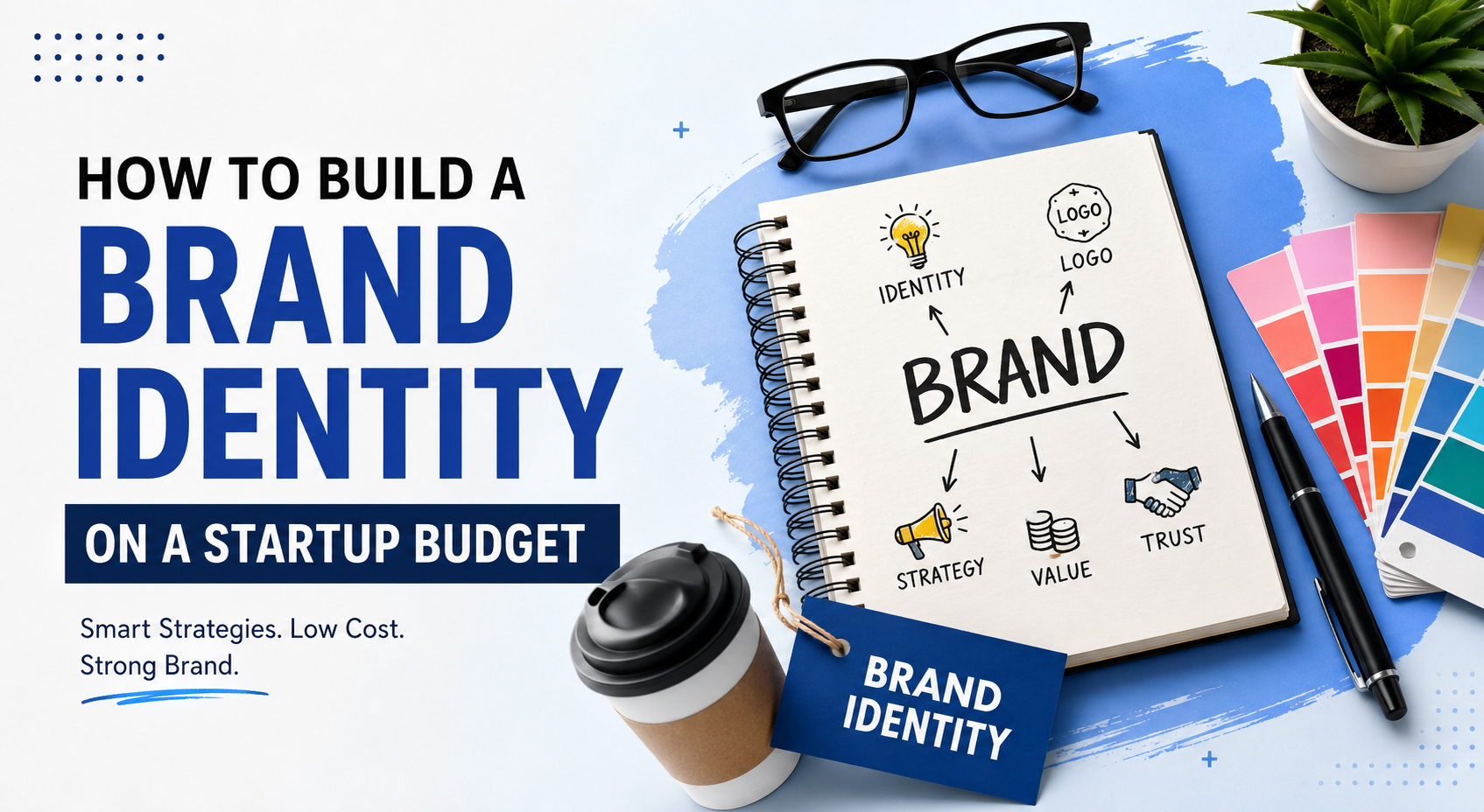
Your brand identity is more than a logo. It includes the way your business looks, sounds, communicates, and makes people feel. A consistent brand can help a small business appear more credible, stand out from competitors, and build trust with potential customers.
The good news is that startups don’t need to spend thousands on branding from day one. They need a clear understanding of who they are, who they serve, and how they want to be remembered.
In this guide, we’ll explain how to build a brand identity on a startup budget, including the essential elements of branding, affordable tools, common mistakes, and practical steps you can take to create a professional brand without overspending.
What Is Brand Identity?
Brand identity is the collection of visual, verbal, and strategic elements a business uses to communicate who it is and how it wants customers to perceive it. It can include your logo, colors, typography, brand voice, messaging, imagery, packaging, website, social media presence, and overall customer experience.
Think of your brand identity as the personality of your business.
For example, two companies may sell similar products but feel completely different because their branding communicates different personalities.
One might look:
- Professional
- Minimal
- Premium
- Sophisticated
Another might look:
- Friendly
- Colorful
- Energetic
- Playful
Neither approach is automatically better. The important thing is that the identity matches the business and appeals to the right audience.
Why Brand Identity Matters for Startups
When you’re a startup, you may think branding can wait until your business becomes successful.
But branding plays an important role from the beginning.
It Helps You Look Professional
Customers often form an impression of a business before they ever purchase from it.
A consistent logo, website, colors, typography, and messaging can make your startup appear more established and trustworthy.
It Makes Your Business Memorable
People encounter countless businesses online every day.
A recognizable visual identity and consistent messaging can make it easier for people to remember your company.
It Helps You Stand Out
Your competitors may offer similar products or services.
A strong brand identity can give customers another reason to choose you.
It Creates Consistency
Imagine your Instagram page uses bright colors, your website uses completely different colors, your business cards use another logo, and your advertisements use different fonts.
This creates confusion.
Brand guidelines help ensure that your business looks and sounds consistent across different platforms.
It Builds Trust
Consistency can make your business feel more reliable.
When customers repeatedly see the same visual identity and messaging across your website, social media, emails, packaging, and advertisements, your brand becomes easier to recognize.
How Much Does It Cost to Build a Brand Identity?
There is no fixed price for building a brand identity.
A startup can spend very little by creating a simple identity using affordable design tools and strategic planning. Another company may spend thousands on professional branding services.
The important question isn’t:
“How much should I spend on branding?”
It’s:
“What branding elements do I actually need right now?”
For a new startup, your initial brand identity may only need:
- A professional logo
- A defined color palette
- 1–2 fonts
- Brand voice
- Basic messaging
- Social media templates
- Website styling
- Simple brand guidelines
You can expand your identity as the business grows.
Step 1: Define Your Brand Before Designing Anything
One of the biggest branding mistakes startups make is opening a design tool and immediately creating a logo.
Start with strategy.
Before deciding on colors or fonts, answer a few basic questions.
Who Is Your Target Audience?
Define who you’re trying to reach.
Think about:
- Age group
- Location
- Interests
- Problems
- Buying behavior
- Budget
- Needs
- Expectations
Your brand should be designed for your customers—not simply according to your personal preferences.
What Problem Does Your Business Solve?
Clearly explain the problem your business addresses.
For example:
Instead of:
“We provide digital marketing services.”
You might communicate:
“We help small businesses attract more customers through practical digital marketing strategies.”
The second statement focuses more directly on the customer’s problem.
What Makes You Different?
Identify your competitive advantage.
Ask yourself:
- What do we do differently?
- Why should customers choose us?
- What do we offer that competitors don’t?
- What do we want to be known for?
Your answers can influence your messaging and visual identity.
Step 2: Choose Your Brand Personality
If your brand were a person, how would it behave?
Would it be:
- Professional?
- Friendly?
- Bold?
- Modern?
- Playful?
- Premium?
- Trustworthy?
- Innovative?
- Approachable?
Choose around 3–5 personality traits.
For example:
Modern + Friendly + Reliable + Simple
These traits can guide your design choices and communication style.
A premium luxury brand may use a very different identity from a fun children’s brand.
Step 3: Create a Simple Brand Positioning Statement
Your brand positioning explains where your business fits in the market.
A simple formula is:
For [target audience], [brand name] is a [category] that helps them [main benefit] because [reason to believe].
For example:
For small businesses, DigiPromoters is a digital marketing agency that helps businesses build their online presence and generate meaningful growth through practical digital marketing strategies.
You don’t necessarily need to publish this statement publicly. It can simply serve as an internal guide.
Step 4: Create a Professional Logo Without Overspending
Your logo is important, but it doesn’t need to be complicated.
A good startup logo should be:
- Simple
- Recognizable
- Legible
- Relevant
- Scalable
- Easy to use across platforms
Avoid creating a logo with too many elements, colors, or complicated graphics.
Your logo should work on:
- Website
- Business cards
- Packaging
- Documents
- Advertisements
- Mobile screens
Should You Design Your Own Logo?
If your budget is extremely limited, you can create a basic logo yourself using affordable design software.
However, if branding is a major part of your business and you have some budget available, hiring a professional designer can be a worthwhile investment.
The goal isn’t to create the most expensive logo.
It’s to create a logo that communicates your business clearly and can remain useful as your company grows.
Step 5: Choose a Simple Color Palette
Color is one of the easiest ways to make your brand recognizable.
You don’t need ten brand colors.
Start with:
- 1 primary color
- 1–2 secondary colors
- 1–2 neutral colors
For example:
Primary: Deep blue
Secondary: Light blue
Neutral: White and dark gray
Your color choices should reflect your brand personality.
For example:
Blue can communicate professionalism and trust.
Green is often associated with nature, growth, or health.
Red can create a sense of energy or urgency.
Black can create a premium or sophisticated appearance.
These associations aren’t universal, so always consider your industry and audience.
Step 6: Select Your Brand Fonts
Typography is another important part of your visual identity.
You don’t need many fonts.
A simple combination of:
Heading font + Body font
is often enough.
For example:
Headings: A distinctive modern font
Body: A clean, highly readable font
Make sure your body font is easy to read on mobile devices.
Avoid using several unrelated fonts throughout your website and social media.
Step 7: Develop Your Brand Voice
Brand identity isn’t only visual.
Your words matter too.
Your brand voice determines how your business communicates with customers.
For example, your brand might sound:
- Friendly
- Professional
- Educational
- Confident
- Conversational
- Direct
Suppose a technology startup wants to sound approachable.
Instead of:
“Our organization provides innovative technological solutions for businesses.”
It could say:
“We make technology simpler so your business can work smarter.”
The second version feels more conversational.
Create Simple Brand Voice Rules
Write down:
We sound: Friendly, clear, confident.
We avoid: Complicated jargon, aggressive selling, overly formal language.
This small document can help everyone on your team communicate consistently.
Step 8: Create a Strong Tagline
A tagline isn’t mandatory, but it can help communicate your brand promise quickly.
A good tagline should be:
- Short
- Memorable
- Relevant
- Easy to understand
- Connected to your value proposition
Avoid generic statements that could describe almost any company.
Instead, focus on what makes your business meaningful to customers.
Step 9: Build Your Brand’s Visual Style
Your brand identity extends beyond the logo.
Think about the visual style of your:
- Website
- Social media posts
- Photography
- Illustrations
- Advertisements
- Presentations
- Packaging
- Email graphics
Decide whether your visuals should feel:
- Minimal
- Bold
- Colorful
- Elegant
- Natural
- Corporate
- Playful
This makes it easier to create consistent content.
Step 10: Use Affordable Branding Tools
Startups have access to many tools that can reduce branding costs.
Depending on your needs, you can use tools for:
- Logo design
- Graphic design
- Color palettes
- Font selection
- Social media templates
- Image editing
- Brand guidelines
- Presentation design
Tools such as Canva can be useful for creating social media graphics and marketing materials.
Free or low-cost font libraries can help you find suitable typography.
Color palette tools can help you experiment with combinations before finalizing your brand colors.
The tool matters less than having a consistent strategy.
Step 11: Create Basic Brand Guidelines
You don’t need a 50-page brand book when you’re starting.
Create a simple document that includes:
Logo
Show your primary logo and alternative versions.
Colors
List the exact color codes for your brand colors.
Typography
Specify which font should be used for headings and body text.
Brand Voice
Explain how your company should communicate.
Imagery
Describe the type of photographs, graphics, or illustrations your brand should use.
Usage Rules
Include a few basic rules such as:
- Don’t stretch the logo.
- Don’t randomly change brand colors.
- Don’t use too many fonts.
- Don’t place the logo where it becomes difficult to read.
This document can save time and maintain consistency as your business grows.
Step 12: Make Your Website Match Your Brand
Your website is often one of the first places customers interact with your business.
Your brand identity should be visible throughout the website.
Keep your:
- Logo consistent
- Colors consistent
- Typography consistent
- Buttons consistent
- Image style consistent
- Messaging consistent
Your homepage should also clearly communicate:
Who you are + What you offer + Who you help + Why it matters
A visually attractive website is useful, but clarity is even more important.
Step 13: Build a Consistent Social Media Presence
You don’t need to be active on every social platform.
Choose the platforms where your target customers actually spend time.
Then create a consistent visual system.
For example, your Instagram posts might consistently use:
- Brand colors
- Same fonts
- Similar layouts
- Consistent logo placement
- Recognizable graphic elements
The goal isn’t to make every post identical.
It’s to make different posts feel like they belong to the same brand.
Step 14: Focus on Customer Experience
A common mistake is treating branding as a design project.
Your brand is also shaped by customer experience.
Think about every interaction customers have with your business:
Advertisement → Website → Inquiry → Sales conversation → Purchase → Delivery → Customer support → Follow-up
If your website looks premium but customer service is poor, the brand experience becomes inconsistent.
A strong brand identity should be supported by a strong customer experience.
Step 15: Don’t Try to Do Everything at Once
Startups often waste money trying to build a complete brand identity immediately.
You don’t need everything on day one.
Start With the Essentials
Prioritize:
- Brand positioning
- Target audience
- Logo
- Color palette
- Typography
- Brand voice
- Website
- Social media templates
- Basic brand guidelines
Add More Later
As your business grows, you can invest in:
- Professional photography
- Custom illustrations
- Packaging design
- Brand campaigns
- Motion graphics
- Video production
- Advanced brand strategy
- Professional brand research
Build your brand in stages instead of trying to perfect everything immediately.
Common Branding Mistakes Startups Should Avoid
Copying Competitors
Research competitors, but don’t copy their identity.
Your goal should be differentiation, not imitation.
Choosing Trends Over Strategy
A design trend may look attractive today but become outdated quickly.
Build an identity around your business and audience rather than chasing every design trend.
Using Too Many Colors and Fonts
More design elements don’t automatically create better branding.
Simplicity often creates stronger recognition.
Changing Your Branding Constantly
Some startups redesign their logo and colors every few months.
Frequent changes can make it difficult for customers to recognize your business.
Don’t change your identity simply because you’re bored with it.
Designing for Yourself Instead of Your Customers
Your favorite color may not be the best choice for your target audience.
Branding should support your business goals and customer expectations.
Ignoring Brand Voice
A consistent visual identity isn’t enough.
If your website sounds corporate while your social media is extremely casual, the overall brand can feel disconnected.
Spending Too Much Too Early
Don’t spend your entire startup budget on branding before validating your product or service.
Your initial identity should be professional and functional. You can refine it as your business develops.
How Digital Marketing and Brand Identity Work Together
Brand identity and digital marketing shouldn’t operate separately.
Your brand influences how customers perceive your business across every digital channel.
SEO
When people discover your website through search engines, your branding helps them understand who they are dealing with.
Social Media Marketing
Consistent branding can make your social media content easier to recognize.
Content Marketing
Your brand voice determines how your blogs, videos, guides, and other content communicate with your audience.
Paid Advertising
Your ads should visually and verbally connect with your landing pages and website.
Email Marketing
Consistent colors, typography, messaging, and tone can create a more recognizable email experience.
Website Design
Your website is where many elements of your brand identity come together.
When all these channels work together, customers experience one consistent brand rather than disconnected marketing campaigns.
How DigiPromoters Can Help Build Your Brand Online
Building a brand on a startup budget doesn’t mean doing everything alone.
The right strategy can help you prioritize what matters most and avoid spending money on unnecessary branding elements.
DigiPromoters helps businesses strengthen their online presence through digital marketing strategies designed around their business goals and target audiences.
From SEO and content marketing to social media and website-focused digital strategies, the objective is to create a consistent online presence that attracts the right audience and supports business growth.
If you’re starting a new business or feel that your current branding doesn’t represent your company properly, the first step isn’t necessarily a complete rebrand.
Start by identifying what’s working, what’s inconsistent, and what your customers actually need from your brand.
Then build from there.
Frequently Asked Questions
What is brand identity for a startup?
Brand identity is the collection of visual and verbal elements that communicate what a startup represents. It can include its logo, colors, typography, messaging, brand voice, imagery, website, social media presence, and customer experience.
Can I build a brand identity with a small budget?
Yes. Startups can create a professional brand identity without a large budget by focusing on essential elements such as positioning, logo, colors, typography, messaging, and consistency. More advanced branding elements can be added as the business grows.
How much should a startup spend on branding?
There is no universal amount. Your branding budget should depend on your business model, financial situation, growth stage, and goals. Focus on the essential brand elements first rather than spending heavily on unnecessary extras.
What are the most important elements of brand identity?
The most important elements generally include brand positioning, logo, colors, typography, brand voice, messaging, visual style, and customer experience.
Can I create my own brand identity?
Yes. A founder can create a basic brand identity using affordable design and productivity tools. However, professional branding support can be valuable when you need deeper strategy, differentiation, or a more sophisticated visual identity.
What is the difference between a logo and brand identity?
A logo is one element of a brand identity. Brand identity includes the complete system of visual, verbal, and strategic elements that communicate what a business stands for.
How long does it take to build a brand identity?
A basic startup brand identity can be created relatively quickly, but developing a strong and consistent identity takes time. The process may involve audience research, positioning, messaging, visual development, testing, and refinement.
Should a startup rebrand frequently?
Usually, no. Frequent changes can create inconsistency and make your brand difficult to recognize. Instead, create a flexible identity that can evolve as your business grows.
Conclusion
Building a strong brand identity doesn’t require a massive startup budget.
What matters most is having a clear strategy, understanding your audience, communicating your value, and maintaining consistency across every customer touchpoint.
Start with the essentials: define your audience, establish your positioning, choose a simple visual identity, develop your brand voice, create basic guidelines, and apply them consistently across your website and marketing channels.
Don’t feel pressured to create a perfect brand on day one.
Your brand can evolve as your business grows.
The goal is to create an identity that is recognizable, relevant, consistent, and connected to the people you want to reach.
If you’re building a startup today, focus less on how much you can spend on branding and more on how clearly you can communicate who you are, who you help, and why customers should choose you.