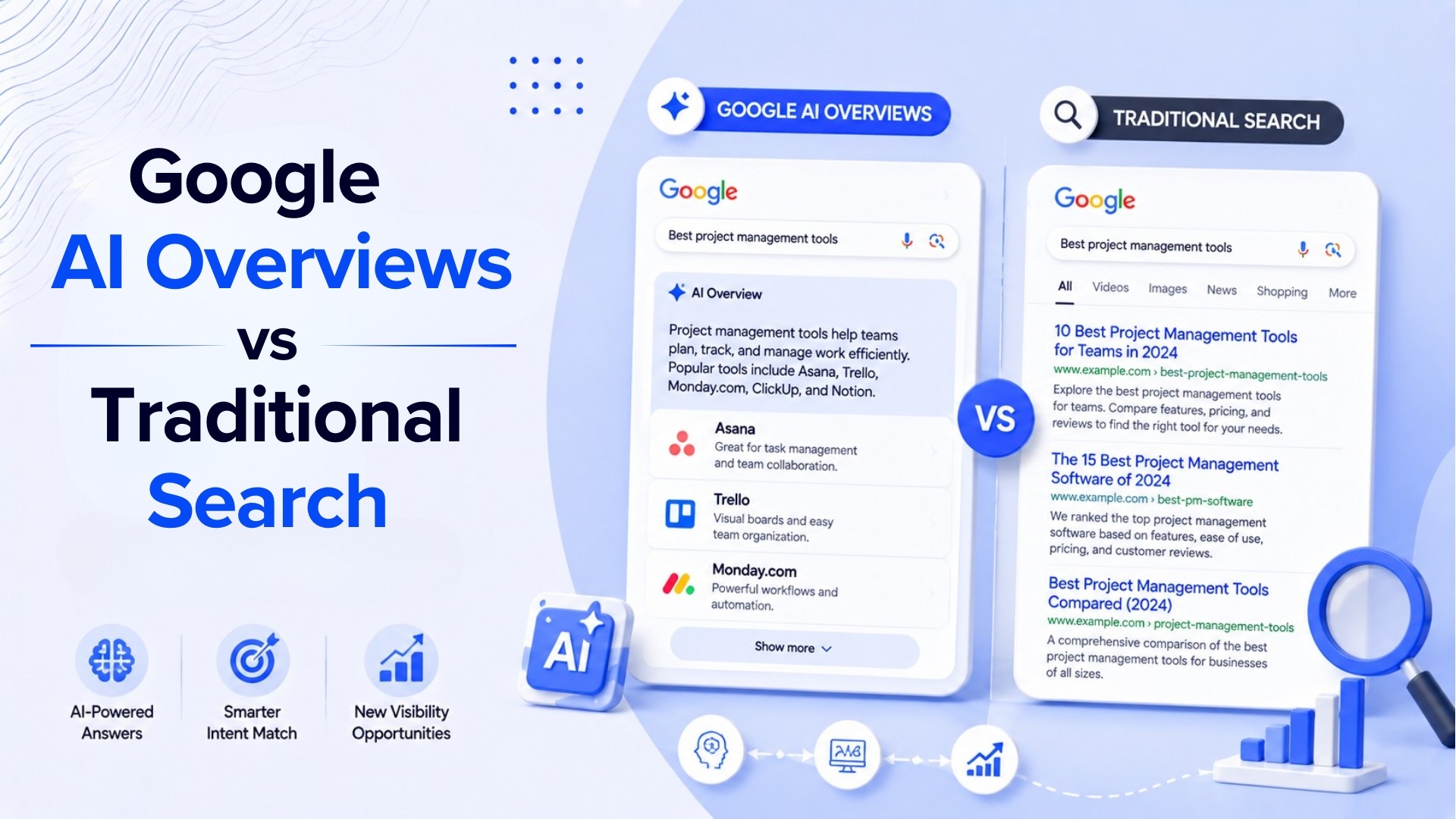






Search is becoming more sophisticated.
Search engines no longer look at a webpage only as a collection of keywords and links. They increasingly try to understand what the content means, what entities it describes, how different pieces of information relate to each other and whether the page provides useful information for a particular search.
This is where schema markup comes into the picture.
Schema markup, also known as structured data, provides search engines with additional information about the content of a webpage in a machine-readable format. It can help identify things such as articles, products, organizations, businesses, events, authors, recipes, reviews and other supported types of information.
For marketers, schema markup has traditionally been associated with enhanced search features and better communication of page information to search engines.
But as search becomes increasingly AI-powered, structured information has another important role: helping machines understand content more clearly.
This does not mean schema markup guarantees higher rankings, inclusion in Google AI Overviews or visibility in generative AI results. Structured data is one part of a much larger search ecosystem.
The real value comes from combining structured information with useful content, strong website architecture, technical SEO, authority and a clear understanding of search intent.
In this guide, we will explain schema markup, how it works, why it matters for SEO, how structured data relates to AI search, common implementation mistakes and how businesses can use it as part of a modern digital marketing strategy.
What Is Schema Markup?
Schema markup is a form of structured data that helps search engines understand the meaning and context of information on a webpage.
Instead of simply seeing text such as:
DigiPromoters
a search engine can potentially understand that the information represents an Organization or a particular business entity, depending on how the structured data is implemented.
Similarly, a webpage containing:
Article title: Schema Markup Explained
Author: Example Author
Date published: September 2026
can be marked up so that supported systems can better understand the relationships between those pieces of information.
Schema.org provides a standardized vocabulary for describing different types of entities and information on the web.
Structured data is generally added using formats such as JSON-LD, which is Google’s recommended format for structured data in many common implementations.
The important distinction is:
Schema markup does not change what users see on the page simply by being added.
Instead, it provides additional machine-readable context about information that is already present on the webpage.
What Is Structured Data?
Structured data is information organized in a standardized format so that machines can interpret it more easily.
Consider this sentence:
“DigiPromoters is a digital marketing agency.”
A human can understand that immediately.
A machine can also process the sentence, but structured data can provide explicit information about the relationship between the name and the type of entity.
For example, structured data can communicate concepts such as:
- This is an organization.
- This is the organization’s name.
- This is the organization’s website.
- This person is the author of this article.
- This page represents an article.
- This item is a product.
- This date represents the publication date.
This additional context can make content easier for search systems to interpret.
Schema.org provides the vocabulary, while formats such as JSON-LD provide a way to communicate that vocabulary within webpages.
How Does Schema Markup Work?
Schema markup works by adding structured information to the HTML of a webpage.
One common implementation uses JSON-LD.
A simplified example could look like this:
<script type=”application/ld+json”>
{
“@context”: “https://schema.org”,
“@type”: “Article”,
“headline”: “Schema Markup Explained: Why It Matters More in the AI Search Era”,
“author”: {
“@type”: “Person”,
“name”: “Example Author”
}
}
</script>
This tells a compatible system that the webpage represents an Article, provides its headline and identifies an author.
A real implementation would typically contain additional appropriate properties and should accurately represent information visible or supported by the webpage.
The key principle is accuracy.
Structured data should describe the page rather than contain information created solely to influence search results.
Why Does Schema Markup Matter for SEO?
Schema markup is not a magic SEO ranking factor.
Adding structured data to a page does not automatically move that page from position 20 to position 1.
Its value is more specific.
Structured data can help eligible content qualify for certain enhanced search appearances when Google’s requirements are met.
For example, depending on the content type and current Google Search features, structured data can be used to communicate information about:
- Products
- Articles
- Events
- Recipes
- Organizations
- Local businesses
- Breadcrumbs
- Courses
- Videos
- Software
- Other supported content types
Google can use structured data to better understand page content and, where applicable, display enhanced search features.
However, implementing valid structured data does not guarantee that a rich result will appear.
Google decides how search results are displayed.
This distinction is important for marketers.
Schema markup supports search understanding and eligibility; it does not guarantee rankings or rich results.
Why Schema Markup Matters More in the AI Search Era
The growth of AI-powered search changes the conversation around structured information.
Traditional search systems already need to understand webpages.
AI-powered systems need to understand information in even more contextual ways.
An AI search experience may need to determine:
- What is this page about?
- Who created the information?
- What organization is being discussed?
- Is this a product or service?
- What facts are being presented?
- How are different entities related?
- Which information is relevant to the user’s question?
Structured data can provide machine-readable context that complements the visible content on a webpage.
This does not mean AI systems simply read schema markup and automatically select that page.
AI search systems use multiple sources and processes to retrieve and evaluate information.
Therefore, schema markup should be viewed as supporting information architecture, not as a shortcut to AI visibility.
Schema Markup and Google AI Overviews
Google AI Overviews provide AI-generated responses for certain searches and include links to supporting webpages.
This creates a broader question:
Can schema markup help a website appear in AI Overviews?
There is no public guarantee that adding schema markup will cause a website to be cited in an AI Overview.
Google’s documentation emphasizes that structured data should accurately describe webpage content and follow its guidelines. AI Overview visibility is influenced by Google’s broader systems for understanding and retrieving information.
Therefore, marketers should avoid claims such as:
“Add schema and Google will cite your website in AI Overviews.”
That is an oversimplification.
A better approach is to use structured data as part of a complete content and technical strategy.
That strategy can include:
- High-quality content
- Clear information architecture
- Search intent optimization
- Technical SEO
- Internal linking
- Topical depth
- Entity clarity
- Author expertise
- Brand authority
- Appropriate structured data
Together, these elements create a stronger foundation for search visibility.
Schema Markup and AI Search: What Is Actually Changing?
The biggest change is not necessarily the schema itself.
Schema vocabulary and structured-data concepts continue to provide machine-readable information.
What is changing is the wider search environment in which that information can be used.
Traditional search may primarily require a system to understand a webpage well enough to determine relevance and display it appropriately.
AI-powered search can involve more complex information retrieval and synthesis.
A system may need to connect multiple pieces of information to answer a broader question.
For example, consider a query:
“Which digital marketing agency offers SEO services for local businesses?”
An AI-powered search experience may need to understand:
- Which entities are agencies?
- Which businesses offer SEO?
- Which services are relevant to local businesses?
- Which information comes from the businesses themselves?
- Which information comes from external sources?
- Which sources are relevant to the query?
Structured information can help provide clearer context about entities and relationships.
But it remains only one part of the process.
What Types of Schema Markup Can Businesses Use?
Different types of structured data serve different purposes.
The correct schema depends on the actual content and purpose of the webpage.
Organization Schema
Organization structured data can describe an organization and relevant information associated with it.
For a business website, this may include information such as:
- Business name
- Website
- Logo
- Contact information
- Social profiles where appropriate
- Other supported organization properties
For a company such as DigiPromoters, organization-related structured data can help clearly communicate basic information about the business entity.
LocalBusiness Schema
LocalBusiness structured data can be relevant for businesses that operate at a physical location or serve specific local areas.
Depending on the business and applicable schema type, information can include:
- Business name
- Address
- Telephone number
- Opening hours
- Location
- Service area
Businesses should use the most appropriate supported subtype rather than selecting a schema type simply because it sounds relevant.
Article Schema
Article structured data can help communicate information about an article.
Possible properties can include:
- Headline
- Author
- Publication date
- Modification date
- Image
- Publisher
For a content marketing website, accurate Article structured data can provide additional context around published content.
Product Schema
Product structured data can describe products and their relevant information.
Depending on the implementation, this can include:
- Product name
- Brand
- Image
- Description
- Offers
- Availability
- Reviews or ratings where legitimately applicable
Product markup is particularly relevant for e-commerce websites.
Breadcrumb Schema
Breadcrumb structured data can describe the navigational hierarchy of a webpage.
For example:
Home → Digital Marketing → SEO → Schema Markup
This can help communicate where a page sits within the website structure.
FAQ-Related Structured Data
FAQ structured data has historically been associated with enhanced search features.
However, eligibility and display rules can change, and not every website should assume that adding FAQ markup will produce a visible FAQ rich result.
The content itself should still answer genuine user questions.
Schema Markup vs Keywords: What Is the Difference?
Keywords and schema markup serve very different purposes.
Keywords help communicate topical relevance through the actual content.
Schema markup provides machine-readable information about what that content represents.
For example, suppose a webpage discusses:
“Digital Marketing Services in Noida.”
The visible content should naturally explain:
- Digital marketing services
- SEO
- Paid advertising
- Social media
- Local marketing
- Target audience
- Business objectives
Schema markup could then provide additional information about the business or webpage where appropriate.
Think of it this way:
Content explains the subject.
Schema helps describe the information and entities within that content.
Both can contribute to a well-structured website, but neither should be treated as a shortcut to rankings.
Does Schema Markup Improve Google Rankings?
This is one of the most common questions about structured data.
The answer requires an important distinction.
Schema markup itself is not a guarantee of higher organic rankings.
Its primary benefits relate to helping search engines understand supported content and making pages eligible for certain enhanced search experiences when the relevant requirements are satisfied.
A website can have perfectly implemented schema and still rank below another website.
Why?
Because search visibility involves many factors, including relevance, content quality, technical accessibility, authority, competition and user intent.
Schema should therefore be considered a supporting SEO technology, not the foundation of the entire SEO strategy.
Can Schema Markup Help With AI Search Visibility?
Schema markup can contribute to clearer machine-readable information, but there is no guaranteed relationship between implementing schema and appearing in AI-generated answers.
This distinction is particularly important as GEO becomes part of digital marketing conversations.
Generative Engine Optimization focuses on visibility within generative and AI-powered discovery experiences.
Schema can be one part of the technical foundation supporting that visibility.
But businesses should also focus on:
- Clear and accurate information
- Strong topical coverage
- Original content
- Relevant expertise
- Brand authority
- Entity consistency
- Useful answers
- Supporting evidence
- Strong website structure
A business should not think:
Schema = GEO
Instead:
Schema + SEO + Content + Authority + Entity Clarity = Stronger Search Infrastructure
Even that combination does not guarantee a specific AI-generated result.
Schema Markup and Entity Optimization
Entity optimization is becoming increasingly relevant as search systems become better at understanding people, organizations, products, places and concepts.
Consider a business website.
A search engine should ideally be able to understand:
Who is this business?
What does it offer?
Where does it operate?
What topics is it associated with?
Which website represents the business?
Who are its authors or experts?
Schema markup can help communicate some of these relationships in a structured format.
However, entity understanding is broader than schema.
Other information can exist across:
- The business website
- Business profiles
- Industry websites
- News publications
- Social profiles
- Reviews
- Directories
- Professional profiles
- Third-party references
This is why entity optimization should be treated as a broader digital presence strategy.
How Schema Markup Supports Content Strategy
Schema is often treated as a technical SEO task.
But marketers should also think about it from a content perspective.
Suppose a company publishes:
- Blog articles
- Service pages
- Product pages
- Author profiles
- Case studies
- FAQs
- Location pages
Each page has a different purpose.
The structured data should reflect that purpose accurately.
For example:
Blog article → Article
Business information → Organization or appropriate LocalBusiness type
Product page → Product
Breadcrumb navigation → BreadcrumbList
This creates a clearer relationship between content and its underlying entities.
Schema Markup and Content Quality
One important principle should always be remembered:
Structured data cannot compensate for poor content.
Imagine a webpage with perfectly implemented schema but:
- Thin information
- Generic writing
- No original insights
- Poor user experience
- Unsupported claims
- Little relevance to search intent
Adding structured data does not transform it into a high-quality resource.
The order should be:
Create useful content → Structure the information → Add appropriate structured data
Not:
Add schema → Expect visibility
This distinction is especially important in the AI search era, where businesses may be tempted to search for technical shortcuts.
Common Schema Markup Mistakes
Using Schema That Does Not Match the Page
Do not mark a webpage as something it is not.
Structured data should accurately represent the content.
Adding Invisible or Misleading Information
Do not use structured data to communicate information that users cannot reasonably find or verify on the page when Google’s guidelines require consistency.
Using Too Many Schema Types
More schema does not automatically mean better SEO.
Use the structured data that genuinely applies.
Copying Schema Without Understanding It
Copying code from another website can create errors or inaccurate information.
Every property should have a reason for being there.
Incorrect Business Information
Business names, addresses, phone numbers and other details should be accurate and consistent.
Ignoring Validation
Structured data should be tested after implementation.
Assuming Valid Schema Guarantees Rich Results
A valid implementation can make content eligible for certain features, but Google ultimately decides whether and how eligible results are displayed.
Treating Schema as an AI Ranking Hack
Schema should not be treated as a secret method for forcing AI systems to cite a webpage.
It is better understood as part of a website’s information architecture.
How to Implement Schema Markup Correctly
A practical implementation process can be simple.
Step 1: Identify the Page Type
Determine what the webpage actually represents.
Is it:
- An article?
- Product?
- Organization?
- Local business?
- Event?
- Breadcrumb?
- Another supported type?
Step 2: Select the Appropriate Schema Type
Use the schema vocabulary that genuinely describes the content.
Step 3: Gather Accurate Information
Make sure the information is:
- Correct
- Current
- Relevant
- Consistent with the webpage
Step 4: Use JSON-LD Where Appropriate
JSON-LD is commonly used because it keeps structured information separate from the visible HTML content and is supported by Google.
Step 5: Add Relevant Properties
Do not add properties simply to make the code longer.
Use properties that accurately describe the page and entity.
Step 6: Validate the Implementation
Use Google’s relevant testing and validation tools to identify errors and warnings.
Step 7: Monitor Search Performance
After implementation, monitor:
- Search impressions
- Clicks
- CTR
- Rich-result eligibility or appearance where applicable
- Organic traffic
- Conversions
Do not assume that any change in traffic was caused solely by schema.
A Practical Example for DigiPromoters
Imagine DigiPromoters creates a webpage titled:
“Digital Marketing Services for Small Businesses.”
The visible page might explain:
- SEO
- Local SEO
- Google Ads
- Meta Ads
- Content marketing
- Social media marketing
- Conversion optimization
The page could also clearly identify DigiPromoters as the business providing these services.
A suitable structured-data strategy might communicate relevant information about:
The organization
The webpage
The article or content where applicable
Breadcrumb navigation
The visible page remains the primary source of information for users.
Structured data provides additional machine-readable context.
The business could then strengthen the overall page through:
- Clear service descriptions
- Relevant internal links
- Useful examples
- Author information
- Supporting resources
- Strong technical SEO
- Consistent business information
- Relevant external mentions
This creates a more complete search visibility strategy than simply adding schema code.
How Schema Fits Into a Modern SEO Strategy
Schema should be considered one component of technical and content optimization.
A modern SEO strategy can include:
Technical SEO
→ Crawlability
→ Indexability
→ Website performance
→ Mobile usability
→ Internal linking
→ Structured data
Content Strategy
→ Search intent
→ Topic coverage
→ Helpful content
→ Original insights
→ Clear answers
Authority
→ Expertise
→ Brand mentions
→ Digital PR
→ Relevant third-party references
AI Search Visibility
→ Entity clarity
→ Structured information
→ Direct answers
→ GEO
→ AEO
These areas overlap.
There is no single optimization technique that replaces the others.
Schema Markup, GEO and AEO
The relationship between these concepts is worth understanding.
SEO
SEO focuses on improving visibility within search engines through technical, content and authority-related practices.
AEO
Answer Engine Optimization focuses on creating content that clearly answers questions and can be useful in answer-oriented search experiences.
GEO
Generative Engine Optimization generally refers to efforts to improve visibility and representation within generative AI experiences.
Schema
Schema provides a structured vocabulary for describing entities and information.
These concepts can work together.
For example:
SEO ensures the website has strong foundations.
AEO helps organize content around useful questions and answers.
GEO considers visibility across generative search experiences.
Schema helps communicate structured information about supported content and entities.
None of these should be treated as a guaranteed ranking or citation mechanism.
Should Every Page Have Schema Markup?
No.
The goal should not be to add structured data to every webpage simply because it is available.
Instead, ask:
Does structured data accurately describe this page and provide useful context?
If the answer is yes, implementation may be appropriate.
If the answer is no, adding unnecessary markup may provide little value.
Quality and accuracy are more important than quantity.
What Should Businesses Do About Schema in the AI Search Era?
Businesses can approach schema strategically rather than treating it as a trend.
Start with the basics:
- Identify important page types
- Ensure business information is accurate
- Use appropriate structured data
- Keep visible and structured information consistent
- Improve website architecture
- Build useful content
- Strengthen topical authority
- Develop brand visibility
- Monitor search performance
For an established website, schema can also be reviewed periodically as the website grows.
New service pages, products, articles and other content types may require different structured-data approaches.
Frequently Asked Questions
What is schema markup in SEO?
Schema markup is structured data added to webpages to help search engines understand the meaning and type of information contained on the page.
Does schema markup improve Google rankings?
Schema markup does not guarantee higher organic rankings. Its primary purpose is to help search engines understand supported content and potentially make pages eligible for certain enhanced search features.
Is schema markup important for AI search?
Schema can provide structured, machine-readable information that supports clearer understanding of webpages and entities. However, it does not guarantee visibility in AI Overviews or other AI-generated results.
Can schema markup help a website appear in Google AI Overviews?
There is no guaranteed method for appearing in Google AI Overviews, and schema markup alone does not guarantee inclusion. It should be used as part of a broader strategy involving useful content, technical SEO, authority and clear information.
What is the difference between schema markup and structured data?
Structured data is the broader concept of organizing information in a machine-readable format. Schema.org provides a standardized vocabulary that can be used to describe that information.
Which schema is best for a business website?
There is no single schema type that is best for every business. The appropriate type depends on the actual content and purpose of the webpage. Organization, LocalBusiness and other relevant supported types may apply depending on the business.
Is schema markup part of GEO?
Schema can be one component of a broader GEO strategy because it provides structured information about entities and content. However, GEO involves much more than schema, including content quality, authority, entity clarity and online brand presence.
Should I add schema to every page?
Not necessarily. Structured data should be used where it accurately describes the content and is relevant to the webpage. Adding unnecessary or inaccurate markup does not automatically improve search visibility.
Conclusion
Schema markup is not a magic button for higher rankings.
It cannot guarantee a Google AI Overview, a featured search result or an AI citation.
Its value is more fundamental.
Schema helps communicate information in a structured, machine-readable way.
That becomes particularly relevant as search engines and AI-powered search systems become increasingly capable of understanding entities, relationships, context and complex questions.
But schema works best when it is part of a larger strategy.
Businesses should combine structured data with:
- Helpful and original content
- Search intent optimization
- Technical SEO
- Strong website architecture
- Internal linking
- Topical authority
- Entity clarity
- Brand visibility
- Expertise and credibility
- GEO and AEO practices where appropriate
For businesses working on long-term online visibility, the goal should not be to find one technical trick that guarantees search exposure.
The goal should be to make the entire digital presence easier to understand, more useful to users and more credible across search environments.
At DigiPromoters, schema markup can be treated as one part of a broader digital marketing and search visibility strategy—working alongside SEO, content marketing, website optimization, GEO, AEO and brand-building activities.
As search continues to evolve, one principle remains important:
Give search systems clear information, give users genuinely useful content, and build a digital presence that deserves to be discovered.