




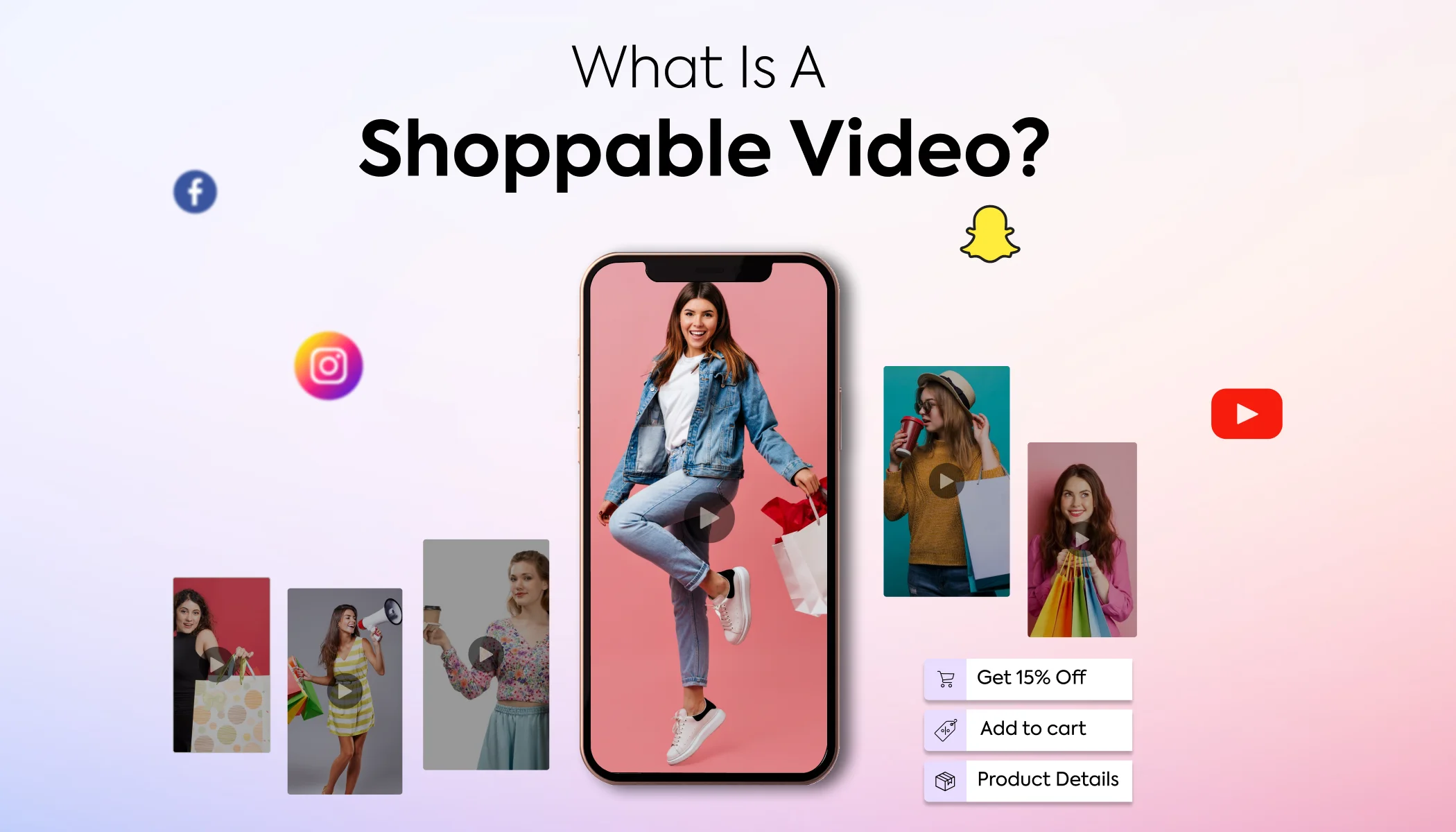
Imagine watching a short video about a new outfit, skincare product, home decor item, or gadget and being able to explore the product and start the buying process without leaving the content. That is the idea behind shoppable videos.
Video has become one of the most effective ways for brands to demonstrate products, explain their benefits, and capture attention. Shoppable video takes this a step further by connecting the content directly with the shopping journey.
Instead of asking viewers to remember a product name, search for it later, or navigate through multiple pages, businesses can provide a clearer path from watching to exploring and purchasing.
For small businesses, ecommerce brands, creators, and local businesses selling products online, shoppable videos can turn ordinary product content into an interactive storefront.
In this guide, we will explain what shoppable videos are, how they work, why they matter, where businesses can use them, and how to create a practical shoppable video strategy.
What Are Shoppable Videos?
Shoppable videos are videos that allow viewers to interact with featured products and take a shopping-related action while watching or immediately after viewing the content.
Depending on the platform and available features, viewers may be able to:
- View featured products
- Open product pages
- Explore product details
- Add products to a cart
- Visit an online store
- Send an enquiry
- Click a shopping link
- Continue to checkout
For example, a clothing brand could create a video showing a complete outfit. Instead of simply displaying the outfit, the video can direct viewers toward the products featured in it.
A viewer who likes the shirt does not have to search the website manually. The content itself becomes part of the shopping experience.
This is why shoppable videos are often described as content that works like a storefront.
How Do Shoppable Videos Work?
The exact process depends on the platform, ecommerce system, and features available to the business.
A typical shoppable video journey looks like this:
Watch → Discover → Explore → Consider → Click → Purchase
For example:
- A skincare brand creates a short video demonstrating its moisturiser.
- The video explains how the product is used.
- The featured product is connected to a shopping destination.
- An interested viewer clicks to learn more.
- The viewer checks the product information.
- They proceed to the website or available checkout process.
- The purchase is completed.
The important difference is that the video is no longer only an awareness tool. It becomes part of the conversion journey.
Why Shoppable Videos Matter for Ecommerce
Traditional product pages are useful because they provide detailed information, images, pricing, specifications, and purchasing options.
However, video can demonstrate things that a static product image cannot.
A video can show:
- How a product looks in real life
- How it is used
- Its size and movement
- Different product variations
- Before-and-after results
- Styling possibilities
- Packaging and unboxing
- The product in a real environment
When shopping functionality is added, customers can move from seeing the product in context to exploring it without having to start the search process again.
This can make the shopping journey more connected.
Shoppable Videos vs Traditional Product Videos
A traditional product video primarily focuses on demonstrating or promoting a product.
For example, a business may upload a video showing how a handbag looks when carried.
A shoppable video adds a path toward the product or purchase.
The difference can be summarised simply:
Traditional product video:
“Here is our product.”
Shoppable video:
“Here is our product, and here is an easy way to explore it.”
Both types of videos can be useful. Shoppable functionality simply adds another layer to the customer journey.
Shoppable Videos vs Social Media Marketing
Social media marketing includes activities such as content creation, community engagement, brand building, paid advertising, influencer marketing, and audience development.
Shoppable videos can be one component of that broader strategy.
For example, an ecommerce brand may use:
- Educational videos to build awareness
- Product videos to explain features
- Customer testimonials to build trust
- Shoppable videos to support product discovery
- Retargeting ads to reconnect with interested customers
This means shoppable video should not replace social media marketing. Instead, it can make certain types of social content more closely connected to ecommerce.
Benefits of Shoppable Videos
Easier Product Discovery
People can discover products while watching content rather than having to search for them separately.
This can be particularly useful for products that are visually appealing or benefit from demonstration.
Fashion, beauty, food, home decor, jewellery, and lifestyle products are examples where visual presentation can play an important role.
More Interactive Content
Shoppable videos encourage viewers to interact with the content.
Instead of simply watching, a viewer can explore a product that catches their attention.
This makes the content part of the shopping experience rather than just an advertisement.
Better Product Demonstration
A photograph may show what a product looks like, but video can demonstrate how it works.
For example, a furniture brand can show how a sofa looks in a room from different angles.
A beauty brand can demonstrate product application.
A clothing brand can show how a particular outfit looks while moving.
A More Connected Customer Journey
When product discovery and shopping are connected, customers may have fewer unnecessary steps between interest and action.
The goal is not to pressure viewers into purchasing. The goal is to make relevant information and the next step easy to access.
Stronger Content-to-Commerce Connection
Businesses already invest time and resources into creating videos.
Adding shopping functionality where appropriate can give that content a clearer commercial purpose.
A product demonstration can educate the viewer while also helping them explore the product.
Where Can Businesses Use Shoppable Videos?
Instagram is highly visual and can be useful for product discovery through Reels, Stories, posts, and other formats.
Businesses can use short videos to showcase:
- New arrivals
- Product demonstrations
- Styling ideas
- Tutorials
- Customer experiences
- Product collections
- Limited-time promotions
Where shopping and product-linking features are available to an eligible business, these can be incorporated into the customer journey.
Facebook can support product-focused video content, advertising, community engagement, and ecommerce activity.
Businesses can combine video content with relevant shopping or website destinations depending on their account and available features.
Facebook can also be useful for retargeting people who have previously interacted with a brand.
YouTube
YouTube is particularly useful for longer product demonstrations, tutorials, reviews, comparisons, and educational content.
For example, an electronics business could create a detailed product review and direct interested viewers toward the relevant product page.
Ecommerce Websites
Businesses can also incorporate video directly into their own online stores.
A product page could include:
- Product demonstration video
- Lifestyle video
- Tutorial
- Customer testimonial
- Unboxing video
The video can help customers understand the product before they decide whether to purchase.
Other Platforms
Depending on the target audience and available features, businesses can explore additional social and video platforms.
The important principle is to select platforms based on customer behaviour rather than trying to use every platform available.
How Small Businesses Can Use Shoppable Videos
Turn Product Demonstrations Into Shopping Content
Instead of creating a video that only says what a product is, demonstrate how it solves a problem.
For example, a home organisation brand could show how its storage product helps organise a small room.
The video demonstrates the product while creating a natural reason for viewers to explore it.
Create “Shop the Look” Videos
Fashion, jewellery, beauty, and home decor brands can create videos featuring multiple products together.
For example, a fashion brand can create a complete look featuring:
- Shirt
- Trousers
- Shoes
- Bag
- Accessories
Each relevant product can be connected to an appropriate shopping destination where the platform supports it.
Create Tutorials
Tutorials can combine education with product discovery.
A makeup business could create a simple makeup tutorial featuring several products.
A cooking brand could demonstrate a recipe using its kitchen products.
A DIY business could show how to complete a project using its tools or materials.
The product becomes part of the useful content rather than feeling like an unrelated advertisement.
Use Customer-Generated Videos
Customers can create some of the most useful product content because they demonstrate real-world experiences.
Businesses can encourage customers to share:
- Unboxing videos
- Product demonstrations
- Styling videos
- Before-and-after experiences
- Reviews
- Tutorials
With appropriate permission, businesses can repurpose suitable customer-generated content in their marketing.
Create Short Product-Focused Reels
Short-form videos can introduce a product quickly.
A simple structure could be:
Hook → Problem → Product → Demonstration → Benefit → Call to Action
For example:
“Struggling to organise a small kitchen?”
Show the problem.
“Here’s a simple storage solution.”
Show the product.
“Three sections, easy access, and designed for compact spaces.”
Then provide the appropriate next step.
How to Create a Shoppable Video Strategy
Define the Goal
Start by deciding what the video should achieve.
Possible goals include:
- Product discovery
- Website traffic
- Product enquiries
- Online sales
- Launching a new product
- Increasing awareness
- Retargeting previous visitors
A clear goal helps determine the video format, audience, messaging, and call to action.
Choose Products That Work Well on Video
Not every product needs to be promoted through video in the same way.
Products that are visually interesting, demonstrable, or easy to understand through movement can be particularly suitable.
Examples include:
- Clothing
- Beauty products
- Furniture
- Home decor
- Food products
- Jewellery
- Fitness products
- Accessories
- Handmade products
Create a Strong Opening
The first few seconds need to communicate why someone should continue watching.
Instead of beginning with a long brand introduction, start with the customer’s problem, desired outcome, or interesting product feature.
Examples:
“Looking for a small-space dining solution?”
“Here’s how this dress looks in three different styles.”
“Want to see how this organiser works?”
The opening should be relevant to the audience rather than simply promotional.
Show the Product in Context
Do not only show the product sitting against a plain background.
Whenever appropriate, demonstrate how it is used.
For example:
A furniture brand can show the product inside a room.
A clothing brand can show different ways to style it.
A kitchen brand can demonstrate it during cooking.
A skincare brand can show the application process.
Context helps viewers understand how the product fits into their own lives.
Add a Clear Call to Action
Tell viewers what to do next.
Depending on the platform, this could be:
- Explore the product
- View the collection
- Visit the website
- Send us a message
- Learn more
- Shop the product
- Check available options
The call to action should match the actual customer journey.
Make Product Information Easy to Understand
A shoppable video should not make customers hunt for basic information.
Where relevant, provide or clearly direct customers toward:
- Product name
- Price
- Size or variations
- Key features
- Availability
- Delivery information
- Product page
- Contact or enquiry option
Organic and Paid Shoppable Video Strategies
Organic Shoppable Video Content
Organic content is published without paying for distribution.
Businesses can create organic videos around:
- Tutorials
- Product demonstrations
- FAQs
- Styling ideas
- Customer reviews
- Behind-the-scenes content
- New product launches
- Educational content
Organic content can help businesses build a relationship with their audience over time.
Paid Shoppable Video Advertising
Businesses can also use paid advertising to distribute product-focused videos to specific audiences.
A paid campaign might target:
- New potential customers
- Website visitors
- Previous product viewers
- Existing customers
- People who engaged with social content
The exact targeting and shopping features depend on the advertising platform and current availability.
Paid campaigns should have a defined objective and tracking setup so the business can understand whether the investment is producing meaningful results.
Shoppable Video Examples for Different Businesses
Clothing Brand
A clothing brand creates a Reel showing five ways to style the same jacket.
The video highlights different outfits and provides an appropriate route for viewers to explore the featured products.
Beauty Brand
A skincare brand creates a morning skincare routine.
The video demonstrates the order in which the products are used and directs interested viewers toward the relevant product pages.
Home Decor Business
A home decor business creates a room makeover video.
The video shows the space before and after decoration and highlights products used in the final setup.
Food Brand
A packaged food business creates a recipe video using its product.
Instead of simply displaying the packaging, the video shows how the product can be incorporated into an everyday meal.
Handmade Brand
A handmade jewellery business creates a behind-the-scenes video showing how a piece is created.
The final section shows the finished product and provides a path for viewers to learn more or place an order.
Local Business
A local business can use product-focused video content to generate enquiries even when the entire transaction does not happen directly on the social platform.
For example, a local interior design company can create a video showing a completed bedroom transformation and invite viewers to enquire about similar projects through WhatsApp or the company’s website.
Common Shoppable Video Mistakes to Avoid
Making the Video Feel Like a Traditional Advertisement
If every video aggressively pushes a sale, viewers may lose interest.
Useful demonstrations, tutorials, and entertaining content can make product promotion feel more natural.
Focusing Only on the Product
Customers want to understand what a product can do for them.
Show the product in context rather than simply displaying it repeatedly.
Using Weak Calls to Action
If viewers are interested but do not know what to do next, the opportunity can be lost.
Make the next step clear and relevant.
Making Videos Too Complicated
A shoppable video does not need elaborate production to be useful.
Clear visuals, good lighting, understandable messaging, and a relevant product can be more important than unnecessary effects.
Ignoring Mobile Viewing
Many social videos are consumed on mobile devices.
Make sure text is readable, important product details are visible, and the video works well vertically when appropriate.
Not Tracking Results
Views alone do not tell the complete story.
Businesses should also monitor meaningful actions such as product clicks, website visits, enquiries, add-to-cart activity, purchases, and advertising performance where tracking is available.
How DigiPromoters Can Help With Shoppable Video Marketing
Creating effective shoppable videos involves more than producing attractive videos.
A digital marketing agency such as DigiPromoters can help businesses connect video content with broader digital marketing and ecommerce goals.
Depending on the business, this may involve:
- Developing a social media strategy
- Planning shoppable video concepts
- Creating content calendars
- Developing product-focused video ideas
- Creating social media creatives
- Supporting Instagram and Facebook marketing
- Planning social media advertising campaigns
- Developing ecommerce marketing campaigns
- Improving calls to action
- Supporting remarketing campaigns
- Tracking important campaign metrics
- Testing different content approaches
For example, an ecommerce brand may need a combination of organic product videos, paid advertising, retargeting, and website optimisation.
A local business may have a different objective, such as using video to generate WhatsApp enquiries or website leads.
DigiPromoters can help businesses build a strategy around their specific audience, products, sales process, and marketing objectives rather than simply producing videos without a clear purpose.
How to Measure Shoppable Video Performance
Businesses should measure results based on the purpose of the campaign.
Useful metrics can include:
- Video views
- Watch time
- Engagement
- Product clicks
- Profile visits
- Website traffic
- Product-page visits
- Add-to-cart actions
- Leads
- WhatsApp enquiries
- Purchases
- Conversion rate
- Cost per result for paid campaigns
- Revenue attributed to campaigns where reliable tracking is available
For example, a video with fewer views may still be valuable if it attracts highly relevant customers who visit the product page and make purchases.
This is why businesses should look beyond vanity metrics and connect video performance with actual business outcomes.
Final Thoughts
Shoppable videos are changing the relationship between content and ecommerce.
Instead of treating video as something that simply creates awareness, businesses can use it as part of the shopping journey. A product demonstration can become a discovery tool. A tutorial can become a product showcase. A styling video can become a digital storefront.
For small businesses and ecommerce brands, the opportunity is not simply to create more videos. It is to create useful videos that make discovering and exploring products easier.
Start with products that benefit from visual demonstration. Create content around real customer needs. Keep the buying journey simple. Use organic content to build trust and paid advertising when appropriate. Then measure what happens after people watch.
When content and commerce work together, a video can do much more than capture attention. It can help customers move naturally from watching to discovering, exploring, and buying.