


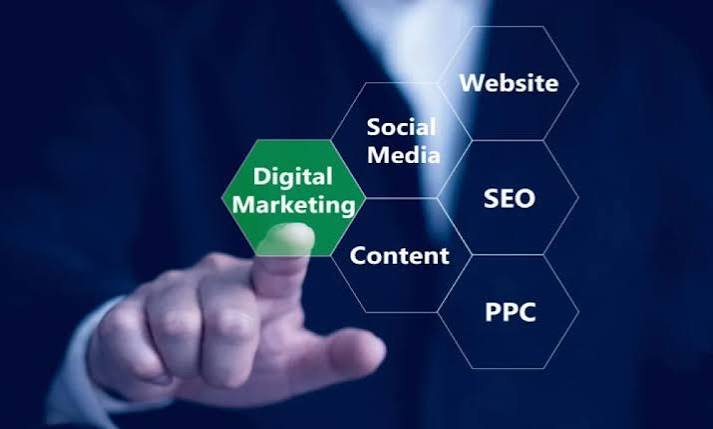
Digital marketing has become an essential part of how businesses connect with customers, build brand awareness, and generate revenue. Whether you operate a small local business, an e-commerce store, a startup, or an established company, understanding the different types of digital marketing can help you make smarter marketing decisions.
From improving your website’s visibility on Google to running targeted social media campaigns, digital marketing offers several ways to reach potential customers online.
But what are the different types of digital marketing, and how do they work?
In this guide, we will explore 12 major types of digital marketing with practical examples, their benefits, commonly used platforms, and tips to help businesses choose the right marketing channels.
What Is Digital Marketing?
Digital marketing refers to promoting products, services, or brands through internet-connected devices and digital channels.
It includes activities such as search engine optimization (SEO), paid advertising, social media marketing, email campaigns, content creation, and online reputation management.
Unlike traditional marketing methods such as newspaper advertisements, billboards, and printed brochures, digital marketing allows businesses to communicate with audiences through websites, search engines, social platforms, email, and mobile devices.
How Does Digital Marketing Work?
Digital marketing works by connecting businesses with potential customers through relevant online channels.
A typical digital marketing process includes:
- Identifying the target audience.
- Understanding customer needs and search behavior.
- Selecting suitable digital marketing channels.
- Creating relevant content or advertising campaigns.
- Attracting visitors and generating inquiries.
- Tracking campaign performance.
- Improving marketing activities using measurable data.
For example, a local interior design company may publish helpful blogs about modern home interiors, optimize its website for Google searches, and use Instagram to showcase completed projects.
Together, these activities can help the company attract people who are actively looking for interior design services.
Traditional Marketing vs Digital Marketing
| Traditional Marketing | Digital Marketing |
| Uses newspapers, television, radio, and print advertisements | Uses websites, search engines, social media, and email |
| Audience targeting may be broad | Audience targeting can be more specific |
| Campaign measurement may be less immediate | Performance can be tracked through analytics |
| Often involves printing or physical distribution | Content and campaigns can be distributed online |
| Customer interaction may be limited | Supports direct engagement and feedback |
Both approaches can support business growth. The appropriate choice depends on the audience, objectives, budget, and marketing strategy.
12 Types of Digital Marketing Explained With Examples
Digital marketing includes several interconnected channels. Each serves a different purpose, from attracting website visitors to nurturing leads and encouraging repeat purchases.
Let’s explore the major digital marketing types and how businesses can use them.
1. Search Engine Optimization (SEO)
Search Engine Optimization, commonly known as SEO, is the process of improving a website’s visibility in unpaid search engine results.
SEO helps search engines understand website content and helps users discover relevant pages when searching for information, products, or services.
For example, a person searching for “best interior designers in Greater Noida” may discover websites that provide relevant information about interior design services in that location.
Main Types of SEO
On-Page SEO: Optimizing website content, headings, title tags, meta descriptions, internal links, and images to improve relevance and usability.
Off-Page SEO: Activities outside the website that can support its reputation and authority, such as earning relevant backlinks and building brand mentions.
Technical SEO: Improving website accessibility, crawlability, indexing, page performance, mobile usability, and structured data implementation.
Local SEO: Improving visibility for location-based searches through relevant website content, business information, customer reviews, and Google Business Profile optimization.
Benefits of SEO
- Helps attract relevant organic website traffic.
- Supports long-term search visibility.
- Improves website structure and user experience.
- Helps businesses reach customers actively searching for their services.
- Supports brand credibility through useful, relevant content.
Practical Example
An interior design company publishes service pages for modular kitchens, living room interiors, and residential interior design.
It also improves page titles, website speed, mobile usability, and local business information.
These activities help search engines understand its services and may improve its visibility for relevant searches.
Suitable for: Service businesses, e-commerce websites, educational institutions, healthcare providers, startups, and businesses seeking long-term online visibility.
Popular tools: Google Search Console, Google Analytics, Google Keyword Planner, Google Trends, and SEO platforms such as Ahrefs or Semrush.
2. Search Engine Marketing (SEM) and Pay-Per-Click Advertising (PPC)
Search Engine Marketing involves promoting websites through search engine marketing activities, particularly paid search advertising.
Pay-Per-Click (PPC) is an advertising model in which advertisers generally pay when someone clicks their advertisement.
Google Ads is one of the most commonly used platforms for search advertising.
How PPC Advertising Works
Businesses select relevant keywords, create advertisements, define targeting settings, and establish campaign budgets.
When users search for relevant terms, eligible advertisements may appear in sponsored search placements.
Advertisers participate in an auction influenced by factors such as bids, ad quality, and relevance.
Benefits of PPC
- Can provide visibility soon after campaigns become eligible to serve.
- Allows businesses to target relevant searches and audiences.
- Supports measurable campaign performance.
- Offers control over budgets and campaign settings.
- Helps test offers, landing pages, and marketing messages.
Practical Example
A dental clinic wants to attract patients searching for dental appointments in its city.
It creates a Google Search campaign targeting relevant terms such as “dental clinic near me” and directs visitors to a landing page containing its services, location, and appointment inquiry form.
The clinic monitors clicks, inquiries, cost per lead, and appointment conversions.
Suitable for: Healthcare providers, education businesses, real estate companies, local services, e-commerce brands, and businesses with specific lead-generation goals.
Popular tools: Google Ads, Google Keyword Planner, Google Analytics, and Google Tag Manager.
3. Social Media Marketing (SMM)
Social Media Marketing involves using social platforms to build brand awareness, share content, communicate with customers, and develop an online community.
It includes organic activities such as publishing posts, responding to comments, sharing videos, and interacting with followers.
Popular Social Media Platforms
- Instagram: Visual content, Reels, product discovery, and brand engagement.
- Facebook: Community building, business updates, and customer communication.
- LinkedIn: Professional networking, B2B marketing, and industry content.
- YouTube: Tutorials, educational videos, product demonstrations, and long-form content.
Benefits of Social Media Marketing
- Helps businesses communicate directly with audiences.
- Supports brand awareness and community building.
- Provides opportunities to showcase products and services.
- Encourages customer interaction and feedback.
- Helps businesses understand audience interests.
Practical Example
A fashion brand publishes Instagram Reels featuring new collections, styling ideas, and customer-generated content.
It responds to comments, shares customer feedback, and maintains a consistent visual identity.
This approach helps the brand develop recognition and encourage audience engagement.
Suitable for: Fashion brands, restaurants, beauty businesses, creators, startups, educational institutions, and lifestyle businesses.
Popular tools: Meta Business Suite, Canva, Instagram Insights, LinkedIn Analytics, and YouTube Studio.
4. Social Media Advertising
Social Media Advertising refers to paid promotional campaigns on social networking platforms.
Unlike organic social media marketing, paid campaigns allow businesses to define campaign objectives, audiences, budgets, placements, and advertising creatives.
Common Social Media Advertising Platforms
- Meta Ads Manager for Facebook and Instagram advertising.
- LinkedIn Ads for professional and B2B audiences.
- YouTube advertising through Google Ads.
- Other platform-specific advertising solutions.
Benefits of Social Media Advertising
- Allows audience targeting based on available platform signals.
- Supports lead generation, website traffic, awareness, and sales objectives.
- Offers different creative formats, including images, videos, and carousels.
- Provides campaign reporting and performance measurement.
- Helps businesses promote specific offers or launches.
Practical Example
A coaching institute wants to generate admission inquiries for its upcoming courses.
It runs a Meta Ads campaign targeting relevant age groups, locations, and audience segments.
The advertisements feature course details and direct interested users to an inquiry form.
The institute tracks leads, cost per lead, and admission conversions to understand campaign performance.
Suitable for: Coaching institutes, e-commerce brands, real estate companies, restaurants, service providers, and businesses launching new products.
5. Content Marketing
Content marketing is a strategy focused on creating and distributing valuable, relevant content to attract and engage a clearly defined audience.
Instead of relying only on direct advertisements, businesses use helpful information to answer customer questions, explain products, and build trust.
Common Content Marketing Formats
- SEO blogs and articles.
- Educational videos.
- Infographics.
- Downloadable guides and e-books.
- Case studies.
- Industry reports.
- Tutorials and webinars.
- Frequently asked questions.
Benefits of Content Marketing
- Helps attract audiences through useful information.
- Supports SEO and organic search visibility.
- Builds brand familiarity and trust.
- Educates potential customers before purchase.
- Provides reusable material for social media and email campaigns.
Practical Example
A digital marketing agency publishes blogs explaining SEO, Google Ads, social media strategies, and website optimization.
A business owner searching for marketing guidance discovers one of these articles and explores the agency’s services.
This creates an opportunity to turn informational website visitors into potential customers.
Suitable for: Digital marketing agencies, B2B companies, educational businesses, SaaS brands, consultants, and service providers.
6. Email Marketing
Email marketing involves communicating with customers and potential customers through targeted email messages.
Businesses use email marketing to share updates, promote products, nurture leads, deliver useful information, and encourage repeat purchases.
Common Email Marketing Campaigns
- Welcome emails.
- Newsletters.
- Promotional campaigns.
- Product recommendations.
- Abandoned-cart reminders.
- Customer onboarding sequences.
- Re-engagement emails.
Benefits of Email Marketing
- Supports direct communication with subscribers.
- Helps maintain customer relationships.
- Enables audience segmentation and personalization.
- Supports repeat purchases and customer retention.
- Allows businesses to measure opens, clicks, and conversions.
Practical Example
An e-commerce store sends a welcome email after a customer subscribes.
Later, it sends relevant product recommendations and an abandoned-cart reminder when a shopper leaves items without completing a purchase.
These messages help the business maintain communication throughout the customer journey.
Suitable for: E-commerce businesses, educational institutions, SaaS companies, online retailers, and service providers.
Popular tools: Mailchimp, Brevo, HubSpot, and Klaviyo.
7. Affiliate Marketing
Affiliate marketing is a performance-based marketing model in which businesses collaborate with affiliates who promote products or services in exchange for commissions on qualifying sales or actions.
Affiliates may include bloggers, publishers, creators, review websites, or niche content platforms.
How Affiliate Marketing Works
- A business creates an affiliate program.
- Affiliates receive unique tracking links.
- They promote products through relevant content.
- Customers click the links and complete qualifying actions.
- The business tracks conversions and pays applicable commissions.
Benefits of Affiliate Marketing
- Provides access to relevant partner audiences.
- Can support performance-based customer acquisition.
- Encourages partnerships with niche publishers.
- Helps expand product visibility.
- Allows businesses to track affiliate-generated conversions.
Practical Example
A technology blogger publishes a comparison of laptops for students.
The article includes affiliate links to participating retailers.
When readers purchase through qualifying tracked links, the blogger may earn a commission according to the affiliate program’s terms.
Suitable for: E-commerce businesses, software companies, technology brands, online education providers, and product-focused businesses.
8. Influencer Marketing
Influencer marketing involves collaborating with content creators who have established audiences on social media or other digital platforms.
Businesses work with influencers to introduce products, demonstrate services, create sponsored content, or increase brand awareness.
Types of Influencers
- Nano-influencers: Smaller, niche-focused audiences.
- Micro-influencers: Relatively focused communities and subject expertise.
- Macro-influencers: Larger audiences and broader reach.
- Celebrity influencers: Public figures with substantial visibility.
Audience size alone does not determine campaign suitability. Businesses should also consider audience relevance, content quality, engagement patterns, and campaign objectives.
Benefits of Influencer Marketing
- Helps brands reach established communities.
- Provides opportunities for product demonstrations.
- Supports awareness and audience engagement.
- Can generate authentic-looking creative content when properly disclosed.
- Helps businesses connect with niche audiences.
Practical Example
A skincare brand collaborates with beauty creators to demonstrate how its products fit into a daily skincare routine.
The creators publish sponsored videos with appropriate advertising disclosures.
The brand measures reach, engagement, website visits, and tracked purchases.
Suitable for: Beauty brands, fashion businesses, lifestyle products, food brands, travel companies, and consumer businesses.
9. Video Marketing
Video marketing uses video content to educate audiences, demonstrate products, communicate brand messages, and support customer decision-making.
Video content can be distributed through websites, social media platforms, email campaigns, and video-sharing platforms.
Common Video Marketing Formats
- Short-form videos and Reels.
- YouTube tutorials.
- Product demonstrations.
- Customer testimonials.
- Educational explainers.
- Behind-the-scenes videos.
- Property walkthroughs.
- Live sessions and webinars.
Benefits of Video Marketing
- Makes complex information easier to demonstrate.
- Supports visual storytelling.
- Helps customers understand products and services.
- Provides reusable content for multiple platforms.
- Supports brand awareness and customer education.
Practical Example
A real estate company creates video walkthroughs of available properties.
The videos highlight room layouts, amenities, location details, and property features.
Interested viewers can contact the company for additional information or site visits.
Suitable for: Real estate companies, educational institutions, product brands, hospitality businesses, service providers, and creators.
10. Mobile Marketing
Mobile marketing refers to reaching customers through smartphones and other mobile devices.
It includes mobile-friendly websites, SMS campaigns, mobile applications, push notifications, and location-based marketing.
Common Mobile Marketing Techniques
SMS Marketing: Sending promotional or informational text messages to customers who have provided appropriate consent.
Mobile App Marketing: Promoting applications and engaging users through app-based experiences.
Push Notifications: Sending timely messages through supported applications or websites.
Mobile Website Optimization: Ensuring websites are easy to navigate and use on smaller screens.
Location-Based Marketing: Delivering relevant messages based on location-related settings and permissions.
Benefits of Mobile Marketing
- Reaches customers through devices they frequently use.
- Supports timely communication.
- Helps businesses improve mobile shopping experiences.
- Enables location-relevant campaigns where appropriate.
- Supports customer engagement and retention.
Practical Example
A restaurant sends an SMS promotion about a weekend offer to customers who have opted in to receive marketing messages.
The message includes the offer details and a link to the restaurant’s menu or ordering page.
Suitable for: Restaurants, retail stores, e-commerce brands, hospitality businesses, and app-based services.
11. Local SEO and Google Business Profile Marketing
Local SEO focuses on improving a business’s visibility in location-based searches.
It is particularly useful for businesses that serve customers within a specific city, neighborhood, or service area.
Google Business Profile is an important tool for managing how eligible businesses appear across Google Search and Google Maps.
Key Local SEO Activities
- Creating and verifying a Google Business Profile.
- Maintaining accurate business information.
- Selecting relevant business categories.
- Adding genuine business photos.
- Updating services and operating hours.
- Encouraging authentic customer reviews.
- Responding professionally to reviews.
- Maintaining consistent business details across relevant platforms.
- Creating useful location-specific website content.
Benefits of Local SEO
- Helps nearby customers discover relevant businesses.
- Supports visibility in local search results.
- Provides useful business information to potential customers.
- Helps build trust through authentic customer reviews.
- Supports calls, website visits, and direction requests.
Practical Example
A salon in Greater Noida optimizes its Google Business Profile with accurate contact details, service information, operating hours, and genuine photos.
It also encourages customers to leave honest reviews.
These activities can help the salon become more discoverable for relevant local searches.
Suitable for: Salons, clinics, restaurants, interior designers, repair services, local retailers, and other location-based businesses.
12. Marketing Automation and AI-Powered Marketing
Marketing automation involves using software to perform repetitive marketing tasks based on predefined workflows, customer actions, or business rules.
AI-powered marketing uses artificial intelligence to support activities such as content analysis, personalization, customer segmentation, campaign optimization, and workflow assistance.
Common Applications
- Automated welcome emails.
- Lead assignment and follow-up reminders.
- CRM integrations.
- Customer segmentation.
- Personalized content recommendations.
- Automated reporting.
- AI-assisted content planning.
- Customer support chatbots.
Benefits of Marketing Automation
- Reduces repetitive manual tasks.
- Supports timely customer communication.
- Helps organize leads and customer information.
- Enables consistent follow-up workflows.
- Provides opportunities for personalization at scale.
Practical Example
A service business receives inquiries through its website.
When a visitor submits an inquiry form, an automated workflow records the lead in its CRM and sends a confirmation email.
The sales team receives a notification and follows up with the potential customer.
AI tools may also help the team organize inquiries or draft initial responses, with human review where appropriate.
Suitable for: Growing businesses, B2B companies, e-commerce stores, SaaS providers, educational institutions, and marketing teams managing multiple campaigns.
Comparison Table: Different Types of Digital Marketing
The following table provides a quick overview of the major digital marketing channels, their purposes, and practical applications.
| Digital Marketing Type | Main Purpose | Common Platforms/Tools | Example |
| SEO | Improve organic search visibility | Google Search Console, SEO tools | Interior design website ranking for relevant service searches |
| SEM/PPC | Generate targeted paid search traffic | Google Ads | Dental clinic advertising appointment services |
| Social Media Marketing | Build awareness and engagement | Instagram, Facebook, LinkedIn | Fashion brand sharing Reels |
| Social Media Advertising | Reach targeted audiences through paid campaigns | Meta Ads Manager, LinkedIn Ads | Coaching institute generating inquiries |
| Content Marketing | Educate and attract potential customers | WordPress, blogs, Canva | Agency publishing SEO guides |
| Email Marketing | Nurture leads and retain customers | Mailchimp, Brevo | E-commerce abandoned-cart emails |
| Affiliate Marketing | Generate sales through partners | Affiliate networks, tracking links | Blogger recommending technology products |
| Influencer Marketing | Reach creator communities | Instagram, YouTube | Skincare brand collaborating with creators |
| Video Marketing | Educate and demonstrate visually | YouTube, Instagram Reels | Real estate property walkthrough |
| Mobile Marketing | Engage customers on mobile devices | SMS platforms, apps, push notifications | Restaurant sending opted-in promotional SMS |
| Local SEO | Improve local search visibility | Google Business Profile, Search Console | Salon appearing for local searches |
| Marketing Automation | Automate customer communication and workflows | HubSpot, CRM platforms | Automatic inquiry confirmation and lead follow-up |
Organic vs Paid Digital Marketing
Digital marketing strategies are generally divided into organic and paid approaches.
Organic marketing focuses on earning visibility through useful content, search optimization, community engagement, and other non-advertising activities.
Paid marketing involves paying platforms or publishers to distribute advertisements to selected audiences.
Both approaches can contribute to a balanced digital marketing strategy.
Organic Digital Marketing
Organic marketing includes activities such as:
- SEO.
- Organic social media content.
- Blog publishing.
- Email newsletters sent to subscribers.
- Community engagement.
- Educational videos.
Advantages:
- Can support sustainable visibility over time.
- Builds a library of useful content.
- Helps establish brand familiarity.
- Does not require paying for every website visit or organic interaction.
Considerations:
- Results may take time.
- Requires consistent content and optimization.
- Search visibility is influenced by competition and search engine systems.
Paid Digital Marketing
Paid marketing includes:
- Google Search Ads.
- Display advertising.
- Meta Ads.
- LinkedIn Ads.
- Sponsored influencer campaigns.
- Paid video advertising.
Advantages:
- Can generate visibility soon after campaigns become eligible to serve.
- Supports specific audience and campaign targeting.
- Provides measurable advertising data.
- Helps businesses promote time-sensitive offers.
Considerations:
- Requires an advertising budget.
- Performance depends on targeting, creative quality, competition, and landing page experience.
- Traffic may decline when campaigns stop.
SEO vs PPC: What’s the Difference?
| SEO | PPC |
| Focuses on organic search visibility | Focuses on paid advertising placements |
| Does not charge per organic click | Often charges per click in PPC campaigns |
| Usually requires ongoing content and technical improvements | Requires campaign budgets and management |
| Can support long-term visibility | Can provide faster campaign visibility |
| Search performance may develop gradually | Results depend on campaign eligibility and delivery |
For example, a startup may use PPC to promote a new service while building SEO-focused website content for longer-term organic visibility.
The two approaches can work together rather than being treated as competing strategies.
Which Type of Digital Marketing Is Best for Small Businesses?
There is no single digital marketing channel that works best for every small business.
The right approach depends on business goals, customer behavior, available resources, industry competition, and marketing budget.
1. Local Businesses
Examples: Salons, clinics, restaurants, interior designers, and repair services.
Relevant channels:
- Local SEO.
- Google Business Profile.
- SEO.
- Social media marketing.
- Google Ads.
A local salon may prioritize accurate business information, genuine reviews, location-specific website content, and social media posts showcasing its services.
2. E-Commerce Businesses
Examples: Clothing stores, skincare brands, electronics retailers, and online gift shops.
Relevant channels:
- SEO.
- Social media advertising.
- Email marketing.
- Influencer marketing.
- Content marketing.
- Affiliate marketing.
An e-commerce brand may combine product-focused content, paid campaigns, and personalized email communication to support product discovery and repeat purchases.
3. Startups
Startups often need to build awareness while managing limited resources.
Relevant channels:
- SEO.
- Content marketing.
- Organic social media.
- Email marketing.
- Carefully targeted paid campaigns.
A startup launching a software product may publish educational articles, create product demonstration videos, and use email campaigns to nurture interested users.
4. Service-Based Businesses
Examples: Consultants, agencies, healthcare providers, and professional service firms.
Relevant channels:
- Local SEO.
- Google Ads.
- Content marketing.
- SEO.
- LinkedIn marketing for relevant B2B audiences.
A digital marketing agency may publish educational blogs, showcase case studies, and optimize service pages to attract businesses looking for marketing support.
5. B2B Companies
B2B businesses often have longer buying journeys involving research, evaluation, and multiple decision-makers.
Relevant channels:
- LinkedIn marketing.
- SEO.
- Email marketing.
- Webinars.
- Case studies.
- Marketing automation.
A B2B software company may use educational resources to attract potential customers and email workflows to support ongoing communication.
How to Create an Effective Digital Marketing Strategy
A successful digital marketing strategy begins with clear business objectives rather than simply selecting popular platforms.
Follow these steps to build a structured marketing plan.
Step 1: Define Your Business Goals
Identify what your business wants to achieve.
Examples include:
- Increasing website traffic.
- Generating qualified leads.
- Improving brand awareness.
- Increasing online sales.
- Improving customer retention.
- Attracting local customers.
Set measurable objectives wherever possible.
Step 2: Identify Your Target Audience
Understand the people most likely to need your products or services.
Consider:
- Age and location, where relevant.
- Customer needs and challenges.
- Buying behavior.
- Preferred platforms.
- Budget and purchase considerations.
- Questions customers ask before making decisions.
Step 3: Research Customer Search Behavior
Understand how potential customers discover solutions online.
Use keyword research, customer conversations, website analytics, and search engine data to identify relevant topics and search intent.
For example, someone searching for “what is SEO” may need educational content, while someone searching for “SEO agency for small business” may be evaluating service providers.
Step 4: Select Relevant Marketing Channels
Choose channels based on your audience and objectives.
A local business may prioritize Google Business Profile and local SEO, while an e-commerce company may focus on product pages, email marketing, and paid social campaigns.
Avoid investing in every platform simply because it is available.
Step 5: Create Valuable Content
Develop content that answers customer questions and supports their buying journey.
Examples include:
- Informational blogs.
- Service pages.
- Product demonstrations.
- Customer testimonials.
- Educational videos.
- FAQs.
- Case studies.
Focus on accuracy, usefulness, originality, and clear presentation.
Step 6: Set a Realistic Marketing Budget
Allocate resources according to business priorities.
Consider:
- Advertising spend.
- Content production.
- Website improvements.
- Marketing tools.
- Creative development.
- Agency or specialist support.
Start with a manageable budget and review performance before expanding campaigns.
Step 7: Launch and Monitor Campaigns
Publish content, activate advertising campaigns, and establish tracking systems.
Check that important actions such as form submissions, calls, purchases, and other conversions are measured appropriately.
Step 8: Measure Performance Using Relevant KPIs
Key Performance Indicators (KPIs) help businesses understand whether marketing activities are contributing to their objectives.
Common digital marketing KPIs include:
| KPI | What It Measures |
| Organic Traffic | Visits from unpaid search results |
| Click-Through Rate (CTR) | Percentage of impressions that result in clicks |
| Cost Per Click (CPC) | Average advertising cost per click |
| Cost Per Lead (CPL) | Marketing cost associated with generating a lead |
| Conversion Rate | Percentage of users completing a desired action |
| Customer Acquisition Cost (CAC) | Cost of acquiring a customer |
| Return on Ad Spend (ROAS) | Revenue attributed to advertising relative to ad spend |
| Engagement Rate | Audience interactions relative to a defined measurement basis |
Choose KPIs that reflect actual business goals rather than focusing exclusively on likes, impressions, or follower counts.
Step 9: Optimize Based on Results
Review campaign performance regularly.
Improve:
- Underperforming landing pages.
- Advertising creatives.
- Audience targeting.
- Website navigation.
- Content quality.
- Conversion tracking.
- Email segmentation.
Digital marketing is an ongoing process of testing, learning, and refinement.
Common Digital Marketing Mistakes to Avoid
Even well-planned campaigns can underperform when businesses overlook important fundamentals.
Here are common mistakes to avoid.
1. Targeting the Wrong Audience
Promoting a product to people who are unlikely to need it can waste marketing resources.
Define your audience carefully and align messaging with customer needs.
2. Ignoring SEO Fundamentals
Publishing content without considering search intent, website structure, mobile usability, or technical accessibility can limit its usefulness.
Build SEO into your website and content planning process.
3. Publishing Inconsistent Content
Irregular publishing can make it difficult to maintain audience engagement and develop a useful content library.
Create a realistic content calendar that your team can maintain.
4. Running Paid Ads Without Clear Objectives
Advertising campaigns should have defined goals, such as generating qualified inquiries, increasing sales, or promoting awareness.
Choose campaign objectives and measurement methods accordingly.
5. Not Tracking Conversions
Clicks and impressions do not necessarily indicate business success.
Track meaningful actions such as purchases, appointment requests, qualified leads, and completed inquiry forms.
6. Ignoring Mobile Optimization
Many customers browse websites through smartphones.
Ensure pages load efficiently, text is readable, forms are usable, and navigation works properly on mobile devices.
7. Using Misleading Marketing Claims
Avoid unsupported promises, exaggerated product benefits, fake reviews, and unclear advertising disclosures.
Accurate communication supports customer trust and responsible marketing.
8. Focusing Only on Vanity Metrics
Follower counts, likes, and impressions can provide useful context, but they should not replace business-focused measurements.
Evaluate marketing performance using relevant indicators such as qualified leads, sales, customer retention, and acquisition costs.
Frequently Asked Questions About Types of Digital Marketing
1. What Are the Main Types of Digital Marketing?
The main types of digital marketing include SEO, PPC advertising, social media marketing, content marketing, email marketing, affiliate marketing, influencer marketing, video marketing, mobile marketing, local SEO, and marketing automation.
Businesses often combine multiple channels to achieve their marketing objectives.
2. What Are the 10 Types of Digital Marketing?
Ten widely used types of digital marketing are:
- Search Engine Optimization (SEO).
- Search Engine Marketing (SEM).
- Social Media Marketing.
- Social Media Advertising.
- Content Marketing.
- Email Marketing.
- Affiliate Marketing.
- Influencer Marketing.
- Video Marketing.
- Mobile Marketing.
Local SEO and marketing automation are also important digital marketing approaches.
3. Which Type of Digital Marketing Is Best for Beginners?
SEO, content marketing, and organic social media marketing are useful starting points for beginners because they help develop foundational skills in audience research, content creation, and online visibility.
The most suitable starting point depends on the learner’s goals and available resources.
4. Which Digital Marketing Channel Is Best for Small Businesses?
The right channel depends on the business model.
Local businesses may benefit from local SEO and Google Business Profile optimization. E-commerce businesses may use SEO, email marketing, and paid social advertising. B2B companies may prioritize LinkedIn, content marketing, and lead nurturing.
5. What Is the Difference Between SEO and PPC?
SEO focuses on improving a website’s visibility in unpaid search results, while PPC involves paying for advertising placements, commonly through a cost-per-click model.
SEO can support long-term organic visibility, whereas PPC can provide paid campaign visibility while advertising budgets are active.
6. Is Social Media Marketing a Type of Digital Marketing?
Yes. Social media marketing is a major type of digital marketing.
It includes organic content publishing, audience engagement, community management, and paid social media advertising across platforms such as Instagram, Facebook, LinkedIn, and YouTube.
7. How Much Does Digital Marketing Cost for a Small Business?
Digital marketing costs vary depending on the channels used, advertising budget, content requirements, competition, tools, and professional support.
A business may begin with organic SEO and social media activities before allocating additional funds to paid campaigns.
There is no universal budget suitable for every business.
8. How Long Does SEO Take to Show Results?
SEO timelines vary based on website condition, competition, content quality, technical factors, and the search terms being targeted.
Some improvements may become visible earlier, while meaningful organic growth often requires sustained work over several months.
No agency can responsibly guarantee a specific ranking or timeline for every website.
9. Can Businesses Use Multiple Digital Marketing Strategies Together?
Yes. Businesses can combine SEO, paid advertising, social media, content marketing, and email campaigns to support different stages of the customer journey.
For example, SEO may attract visitors, educational content may build trust, and email marketing may support follow-up communication.
10. How Can I Choose the Right Digital Marketing Agency?
Evaluate an agency based on its understanding of your business goals, relevant experience, service capabilities, communication process, reporting practices, and approach to measurable outcomes.
Ask about its strategy, deliverables, campaign tracking, and how it evaluates performance.
Avoid selecting an agency solely on promises of guaranteed rankings or guaranteed leads.
Conclusion: Choose the Right Types of Digital Marketing for Sustainable Growth
Understanding the different types of digital marketing helps businesses make informed decisions about where to invest their time, effort, and marketing budget.
SEO, PPC, social media marketing, content marketing, email campaigns, influencer partnerships, and marketing automation each serve different purposes.
The right marketing mix depends on your business goals, target audience, industry, customer buying journey, and available resources.
For businesses looking to strengthen their online presence, DigiPromoters provides digital marketing support focused on improving search visibility, developing engaging content, and helping brands connect with relevant audiences.
Whether you are building a digital presence from the beginning or refining an existing marketing strategy, choosing the right channels and measuring meaningful outcomes can help establish a foundation for sustainable growth.
Explore DigiPromoters’ digital marketing services: https://digipromoters.com/