




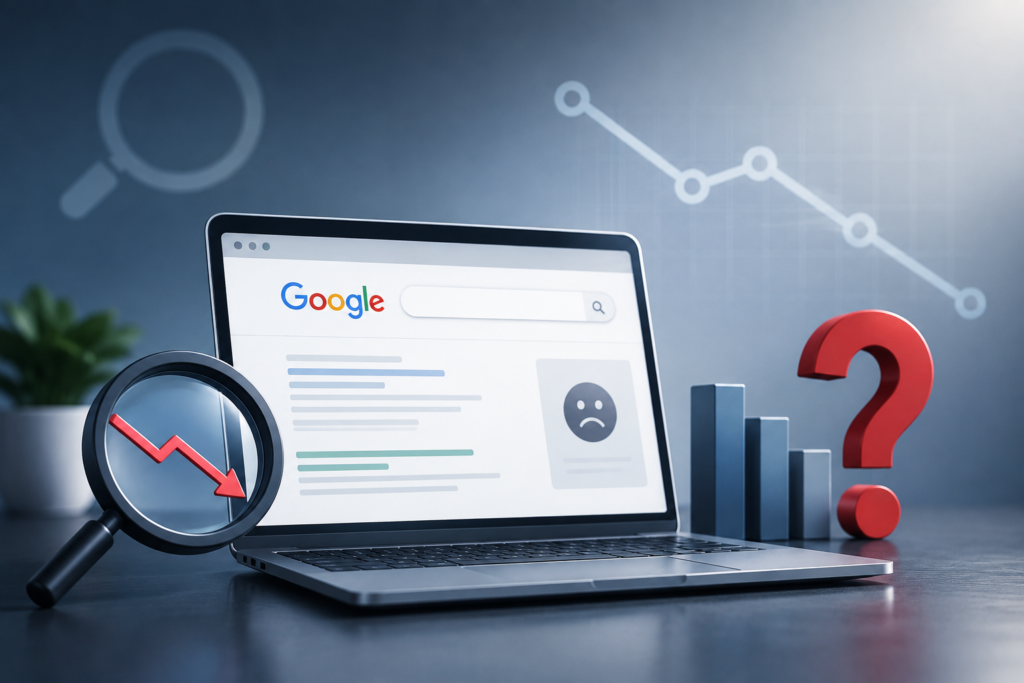
You’ve added keywords, written blog posts, maybe even paid someone to “do SEO” for you — and your website still isn’t showing up on Google. It’s one of the most frustrating experiences for a business owner, and it’s more common than you think. The truth is, SEO has a lot of moving parts, and missing even one of them can quietly cancel out all your other efforts. Here are the six most common reasons your website isn’t ranking, and what to do about each one.
1. You’re Targeting the Wrong Keywords
Many businesses try to rank for keywords that are either too competitive (like “digital marketing agency”) or too broad to convert. If you’re a new or small website, going head-to-head with established players for high-competition terms is nearly impossible early on.
- Focus on long-tail keywords first (e.g. “affordable digital marketing agency in Noida” instead of just “digital marketing agency”)
- Check keyword difficulty before targeting a term — free tools like Google Keyword Planner or Ubersuggest show this
- Target keywords that match what your actual customers search, not just what sounds impressive
2. Your Website Has Technical SEO Issues
You can write great content, but if Google can’t properly crawl or index your site, none of it matters.
- Check Google Search Console for crawl errors or indexing issues
- Make sure your site has a valid XML sitemap submitted to Google
- Confirm important pages aren’t accidentally blocked in robots.txt
- Fix broken links and duplicate content issues
3. Your Content Isn’t Answering Search Intent
Google ranks content based on how well it satisfies what the searcher actually wants — not just whether it contains the keyword.
- Search your target keyword yourself and study what’s already ranking on page one
- Match the format (list, guide, comparison) that’s already performing for that keyword
- Answer the question fully instead of writing a thin, keyword-stuffed page
4. Your Website Is Too Slow
Page speed is a confirmed Google ranking factor, and slow-loading pages also cause visitors to leave before Google can even count the visit as a good signal.
- Test your site speed with Google PageSpeed Insights
- Compress large images before uploading them
- Avoid too many heavy plugins or scripts, especially on WordPress
5. You Don’t Have Enough Quality Backlinks
Backlinks are still one of Google’s strongest trust signals. Without them, even well-optimized pages can struggle to rank against competitors who have more authority.
- Focus on a few relevant, quality backlinks rather than many low-quality ones.
- Guest post on real, relevant blogs in your industry
- Get listed in legitimate business directories relevant to your niche
6. SEO Simply Takes Time
Sometimes nothing is wrong — SEO is just slow by nature. Google needs time to crawl, index, and trust a page before ranking it competitively.
- Most new pages take 4–12 weeks to show meaningful movement
- Track progress with Search Console instead of just checking your own Google search
- Stay consistent — stopping and restarting SEO efforts resets momentum

Final Thoughts
Not ranking on Google doesn’t usually mean SEO “isn’t working” — it usually means one or two specific pieces are missing. Work through the list above in order: keywords, technical health, content quality, speed, backlinks, and patience. Fixing even one gap can be the difference between page five and page one.
Not sure which of these is holding your website back? Talk to our team at Digipromoters Agency for a free audit.
Frequently Asked Questions
1. How long does it take for a website to rank on Google after SEO?
Most websites start seeing initial movement within 4–12 weeks, though competitive keywords or industries can take 3–6 months for strong rankings.
2. Why did my Google ranking drop suddenly?
Sudden drops are often caused by a Google algorithm update, a technical issue like a broken page, lost backlinks, or a competitor outranking you with stronger content.
3. Can a website rank on Google without backlinks?
It’s possible for low-competition, very specific keywords, but for most commercial keywords, backlinks remain an important ranking factor alongside content quality.
4. Does website speed really affect Google rankings?
Yes. Google has confirmed page experience and speed as ranking factors, and slow sites also lose visitors before search engines can register a positive signal.
5. Is it normal for SEO to show no results for months?
Some delay is normal, especially for new websites. However, if there’s truly zero movement after 3+ months of consistent effort, it’s worth auditing for technical issues or intent mismatches.